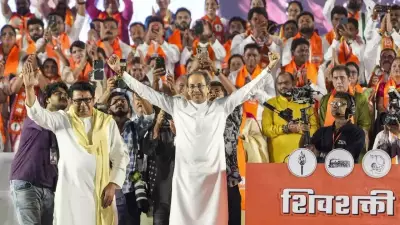
All India Majlis-e-Ittehadul Muslimeen (AIMIM) president Asaduddin Owaisi ignited a fresh political controversy on Sunday, casting doubt on Nationalist Congress Party (NCP) stalwart Sharad Pawar's chances of securing a return to the Rajya Sabha. Speaking in Amravati, Owaisi claimed that the shifting political sands of Maharashtra have left Pawar without the necessary numerical strength for re-election.
Political Barbs and Alliance Dynamics
Owaisi was in the city to campaign for his party's candidates in the upcoming Amravati Municipal Corporation (AMC) elections. At a press conference before a public rally, he did not mince words while dissecting the state's volatile alliance politics. He pointed out that parties often share power but contest elections separately, accusing rival blocs of sacrificing ideology at the altar of political power. The Hyderabad MP asserted that the public is keenly observing these contradictions and will deliver a fitting electoral response.
On the specific question of Sharad Pawar's future, Owaisi's remarks directly questioned the veteran leader's grip in the current assembly. His comments come amid a period of significant flux in Maharashtra's political landscape, with alliances being reconfigured and loyalties tested.
Challenges to RSS, BJP on Core Issues
Shifting his focus to the ruling dispensation, Owaisi launched a sharp attack on the Rashtriya Swayamsevak Sangh (RSS) and the Bharatiya Janata Party (BJP). He alleged that both organizations were deliberately sidestepping core issues affecting common citizens. In a direct challenge, he dared RSS chief Mohan Bhagwat to clearly define "love jihad" and place credible data in the public domain to substantiate the claims often made around the term.
Owaisi argued that such issues are amplified primarily to distract national attention from pressing concerns like unemployment, the border situation with China in Ladakh, and other policy failures. He emphasized that personal choices made by consenting adults fall firmly within the realm of individual rights and liberties.
Highlighting Urban Civic Breakdown
Beyond the political sparring, the AIMIM leader spotlighted what he termed a severe breakdown in civic service delivery in urban areas. He pointed to glaring gaps in the provision of safe drinking water, inadequate sewerage networks, and shortages in schools and hospitals. Owaisi questioned why basic amenities remain unresolved for citizens even as political parties trade lofty claims during election seasons.
He raised a critical concern about governance, alleging that funds allocated for public services often fail to translate into tangible results on the ground. This critique of urban infrastructure and administration formed a central part of his campaign message for the local civic polls.
Owaisi also touched upon broader national policy, questioning the BJP and RSS's stance on consistent foreign policy and India's approach towards neighboring Bangladesh. He underlined that stability in Bangladesh is of paramount importance for India, given the long shared land border and broader strategic interests in the region.