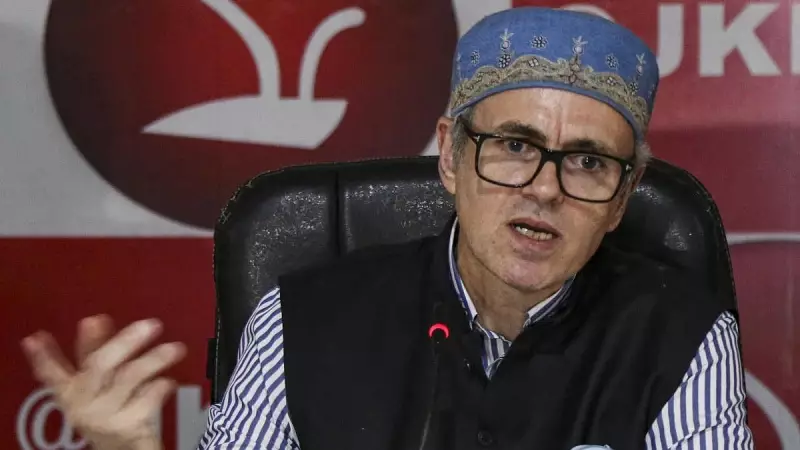
Former Chief Minister of Jammu and Kashmir, Omar Abdullah, has issued a strong demand for accountability from those responsible for the region's security, expressing deep concern that the promised end to violence has not materialized.
A Plea to End the Bloodshed
Abdullah voiced his anguish over the persistent violence, stating that the people of Jammu and Kashmir, and particularly Kashmir, have endured decades of bloodshed. He explicitly referenced the last 30-35 years as a period of immense suffering for the region.
His comments highlight a broken promise, pointing to the year 2019 as a turning point where assurances were given that the turmoil would cease. "We were told that this will not happen now and this cycle will end after 2019," Abdullah recalled. However, he lamented that this has not been the reality on the ground.
The Unfulfilled Promise of 2019
The National Conference leader's statement directly challenges the narrative that the constitutional changes enacted in Jammu and Kashmir in 2019 would bring a definitive end to the long-standing conflict. Instead of peace, the cycle of violence has continued, raising serious questions about the current security and political strategy.
The core of his message is a clear call to action: those in charge of security must be held responsible for the ongoing situation. His words, "We want this cycle (of violence) to stop," underscore a desperate public sentiment for normalcy and peace.
Implications and the Road Ahead
This public critique from a key political figure adds a significant voice to the discourse on Kashmir. It shifts focus towards the need for effective governance and security management rather than just political changes. The statement made on November 19, 2025, signals that for many, the wait for a peaceful future remains fraught with uncertainty and disappointment.