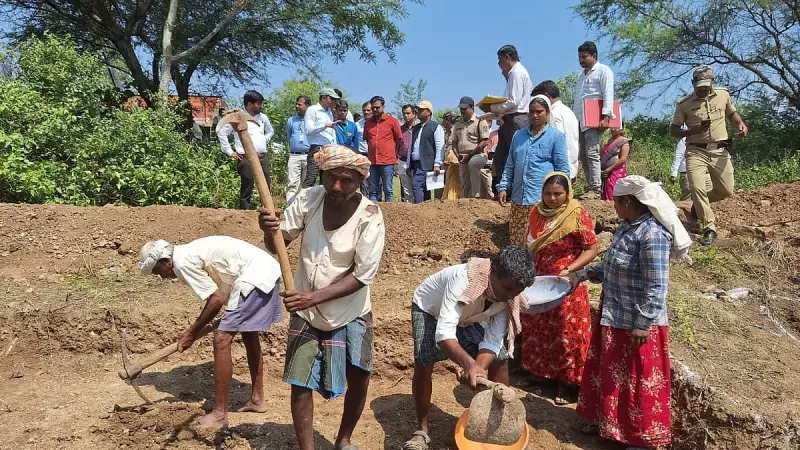
Concerns are mounting among workers under the Mahatma Gandhi National Rural Employment Guarantee Act (MGNREGA) as significant changes in the scheme's administration threaten to undermine its core principles. Labourers and activists fear a massive exclusion of workers and the continuation of poor wage rates, stemming from a decisive shift in power away from local governing bodies.
Centralisation Overrides Local Decision-Making
The primary anxiety stems from the erosion of authority previously held by gram panchayats. These village-level councils are losing their power to decide on local projects and asset creation under the scheme. Instead, the fate of both employment projects and the wages paid is now increasingly determined by central government allocations and directives. This move from decentralized planning to centralized control is seen by many as stripping the program of its grassroots, demand-driven nature.
Implications for Rural Workers in Karnataka
For the millions of rural households in Karnataka and across India that depend on NREGA for livelihood security, this shift poses a direct threat. Workers express deep fear that without the gram panchayats' understanding of local needs, project selection will become disconnected from community requirements. This could lead to fewer relevant job opportunities and make it easier for the administration to limit the number of workdays provided, effectively pushing people out of the safety net. The report highlighting these concerns was published on 06 January 2026, at 21:40 IST.

A Scheme in Peril?
The overarching sentiment among the workforce is that these changes are allowing NREGA to die a slow death. By removing the gram panchayat's succour and role as a local advocate for employment generation, the scheme risks becoming a hollow framework. The centralisation of fund and project allocation is perceived as a mechanism to reduce the scheme's footprint and financial burden, rather than to strengthen its implementation. The consequences could be severe for rural economies already under stress.
Observers note that this development is a critical moment for the world's largest rural job guarantee program. The move has sparked a debate on governance, federalism, and the right to work. Whether this leads to a more efficient system or results in the exclusion of the most vulnerable workers remains to be seen, but the current wave of apprehension among the labour force is palpable and widespread.