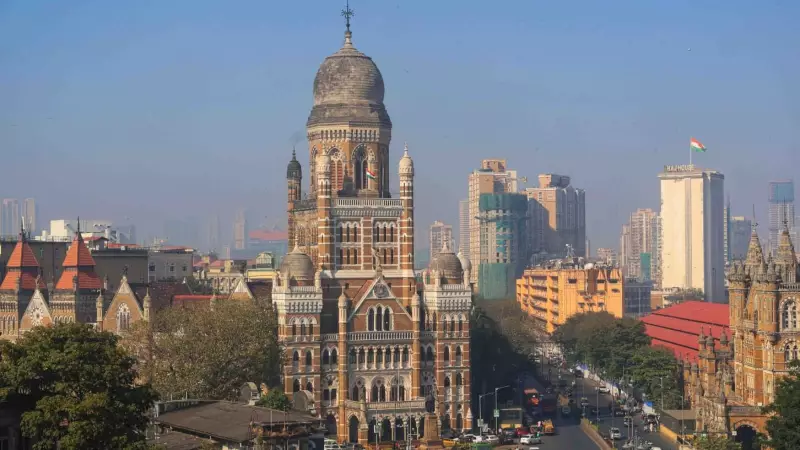
Mumbai Civic Polls Show Steady Migrant Influence Despite Marathi Push
The Brihanmumbai Municipal Corporation elections witnessed intense campaigning around Marathi identity. Political parties, particularly the Shiv Sena factions and Maharashtra Navnirman Sena, emphasized regional pride throughout their campaigns. Other parties attempted to balance this focus in Mumbai's multilingual landscape.
Election results reveal a different story. Mumbai's migrant population continues to shape civic politics significantly. Non-Marathi corporators now number 78 in the 227-member House. This represents just over one-third of the total strength.
Marginal Increase in Non-Marathi Representation
The current figure shows a slight rise from the 2017 elections. Back then, 76 corporators came from non-Marathi backgrounds. This marginal increase occurs despite heightened linguistic identity rhetoric during the campaign period.

Political parties display varied dependence on non-Marathi voters. The Bharatiya Janata Party emerges with the strongest non-Marathi presence. Among its 89 elected corporators, 38 belong to non-Marathi communities. This constitutes 42.7 percent of the BJP's BMC contingent.
The BJP's substantial non-Marathi representation reflects its strong support in linguistically mixed suburban areas. These regions have seen consistent migrant population growth over recent decades.
Shiv Sena Maintains Marathi Focus
Both Shiv Sena factions remain firmly rooted in Marathi-speaking constituencies. The Uddhav Thackeray-led Sena (UBT) counts only seven non-Marathi corporators among its 65 winners. The Eknath Shinde-led faction shows similar numbers with five non-Marathi representatives out of 29 elected members.
These figures reinforce the Shiv Sena's continued emphasis on Marathi identity politics. The party has historically built strong neighborhood networks around this theme since its rise in the late 1960s.
The Indian National Congress presents a contrasting pattern. Sixteen of its 24 corporators come from non-Marathi backgrounds. This highlights the party's reliance on migrant-heavy and minority-concentrated pockets across Mumbai.
Historical Context of Migrant Representation
Non-Marathi communities once dominated Bombay Municipal Corporation politics. In the decades following independence, Gujaratis, Parsis, Marwaris, Muslims, Christians and South Indians played prominent civic roles.
During the 1960s, non-Marathis comprised approximately 58 percent of Mumbai's population. By the mid-1970s, they accounted for nearly 45 percent of corporators. Between Independence and 1968, fifteen of the city's twenty-one mayors came from non-Marathi backgrounds.
The Shiv Sena's emergence changed this dynamic dramatically. Through neighborhood mobilization and Marathi voter organization, the party made regional identity central to civic politics. Non-Marathi representation subsequently declined steadily.
By 2012, non-Marathi corporators reached a low of 28 percent. This occurred despite continuous migration to Mumbai during this period.
Demographic Shifts and Political Impact
Census data reveals important linguistic trends. Marathi remains Mumbai's most widely spoken language. However, the Hindi-speaking population has grown much faster than any other group since the 1970s.
Gujarati speakers have experienced slower growth. Urdu speakers have seen steady increases as well. These demographic changes began showing political effects after 2014.
The 2017 BMC elections marked a turning point. Seventy-six non-Marathi corporators won seats, representing 33 percent of the House. This was a significant increase from the 28 percent recorded in 2012.
The current House continues this trend with 78 non-Marathi representatives. This consistent rise has intensified language-based campaigning before elections. Parties like the Shiv Sena and MNS have particularly emphasized this approach.
BJP's Pro-Migrant Positioning
The growing non-Marathi representation has helped the BJP consolidate support among migrant voters. With the party in power at the Centre, it has comfortably projected itself as pro-migrant in Mumbai.

Meanwhile, the Shiv Sena's earlier anti-migrant tone has softened considerably. The BJP has promoted more non-Marathi leaders in the city than in previous years. This has given migrant communities greater political confidence and visibility.
Maharashtra Chief Minister Devendra Fadnavis addressed the Marathi identity issue directly. He stated the BJP does not take a defensive position on regional pride matters.
"Since we are a pan-India party, we don't aggressively project regional pride," Fadnavis explained. "In every election, they try to push emotive issues as they have nothing to counter my development agenda. We are not defensive on Marathi issues. We are batting on the front foot."
The All India Majlis-e-Ittehadul Muslimeen shows a similar pattern to the Congress. Seven of its eight elected corporators come from non-Marathi backgrounds. The Nationalist Congress Party, which won three seats, returned only Marathi corporators.
Mumbai's civic politics continues evolving amid these demographic and political shifts. The steady non-Marathi representation suggests migrant communities maintain significant influence despite identity-focused campaigning.