Nitish Kumar and Nitin Nabin Resign from Bihar Legislative Seats, Triggering Political Transition
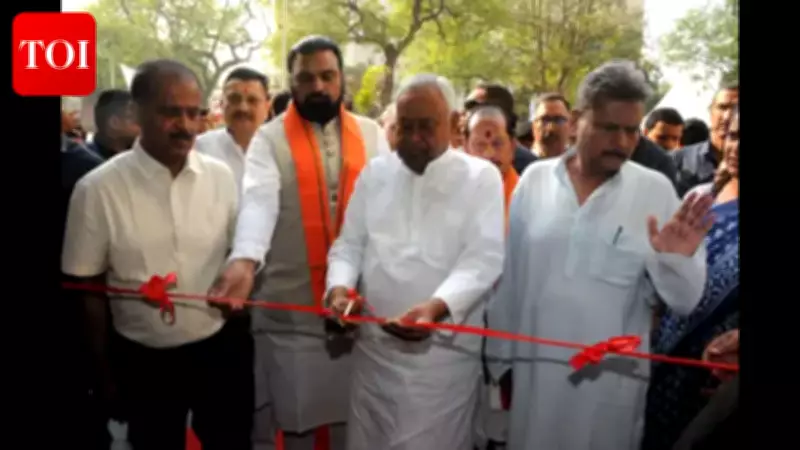
In a significant political development, Bihar Chief Minister Nitish Kumar and BJP national president Nitin Nabin officially vacated their seats in the Bihar legislative council and the legislative assembly, respectively, on Monday. This move comes just two weeks after both leaders were elected to the Rajya Sabha on March 16, setting the stage for a major reshuffle in the state's governance.
Nitish Kumar submitted his resignation letter to Bihar legislative council chairman Awadhesh Narain Singh, while Nitin Nabin's resignation from the state assembly was delivered to Speaker Prem Kumar through senior party functionaries. Both resignations were promptly accepted within hours by the respective heads of the Houses, marking a swift procedural conclusion.
Implications for Bihar's Leadership and BJP's Ambitions
With Nitish Kumar now poised to transition to the Rajya Sabha, intense political speculation has erupted over who will assume the chief minister's role once he relinquishes the position. The transition is widely anticipated to occur after the conclusion of the current "kharmas," an inauspicious period in Hindu astrology that ends on April 14, adding a cultural dimension to the timing of the change.

The BJP camp is visibly energized by the prospect of finally securing its own chief minister in Bihar, the only major Hindi heartland state where the party has not held the top post despite being part of the ruling coalition for nearly two decades. This development represents a pivotal moment in Bihar's political landscape, potentially reshaping power dynamics.
Frontrunners and Caste Considerations in Succession Race
Several prominent names are under discussion as potential successors to Nitish Kumar. Among the leading contenders are Union Minister of State for Home Affairs Nityanand Rai and State Industries Minister Dilip Kumar Jaiswal, both regarded as close associates of Union Home Minister Amit Shah. Additionally, Deputy Chief Minister Samrat Choudhary, who holds the crucial home portfolio, is also a strong candidate.
Bihar Assembly Speaker Prem Kumar, who belongs to the Extremely Backward Classes (EBC), is emerging as a possible dark horse if caste arithmetic becomes a central factor in the BJP's decision-making process. Caste remains a significant element in Bihar politics, with EBCs comprising 36.01% of the state's population and Backward Classes accounting for 27.12%. Notably, Rai, Jaiswal, and Samrat Choudhary all hail from the Backward Classes category.
Decision-Making Process and External Influences
Some BJP insiders believe the next chief minister will be meticulously "handpicked" by the party's top leadership in Delhi, following consultations with the Rashtriya Swayamsevak Sangh (RSS). They cite the example of Rajasthan, where a first-term MLA was unexpectedly chosen as chief minister after a Union minister reportedly arrived in Jaipur with a slip of paper bearing the selected name, highlighting the centralized nature of such decisions.
Resignation Procedures and Constitutional Context
Earlier in the day, Nitish Kumar's resignation letter was formally delivered to the legislative council chairperson by Parliamentary Affairs Minister Vijay Kumar Choudhary and JD(U) MLC Sanjay Kumar Singh, alias Gandhiji. Nitin Nabin's resignation was submitted by Bihar BJP president Sanjay Saraogi to Speaker Prem Kumar, after Nabin had entrusted the document to Saraogi before departing for Assam on Sunday.
Nitish Kumar was elected to the Rajya Sabha alongside four other NDA leaders: Nitin Nabin, Union Minister Ram Nath Thakur, RLM president Upendra Kushwaha, and BJP state general secretary Shivesh Kumar. Under the Prohibition of Simultaneous Membership Rules, 1950, members elected to the Rajya Sabha are required to vacate their seats in the Bihar Legislative Council or state assembly within 14 days, making these resignations a constitutional necessity.
Political Reactions and Emotional Responses
Reacting to Nitish Kumar's resignation, Vijay Kumar Choudhary emphasized the constitutional nature of the process, stating, "The CM has been elected as a member of the Rajya Sabha. This is a constitutional process. He had to resign today."

In an emotional display, Rural Works Minister Ashok Choudhary, considered close to Nitish Kumar, was seen weeping inconsolably before cameras. He praised Nitish Kumar's leadership, saying, "I have been with Nitish Kumar Ji in the House for a long time. When the Covid-19 pandemic emerged, I grew closer to him. He is a great leader, a respected person, and the guardian of the state. His way of working, showing respect even towards opponents, and demonstrating affection towards all is unparalleled. There cannot be another Nitish Kumar in this country."
Choudhary added that legislators in both Houses would deeply miss Nitish Kumar's presence, noting his role in "scolding, reprimanding, and guiding" newcomers and rescuing ministers when they encountered difficulties. "Nitish had a grip on every department. He used to guide even the newest ministers," he remarked.
Opposition Allegations and Political Accusations
Leader of the Opposition in the state assembly, Tejashwi Prasad Yadav, alleged that the BJP forced Nitish Kumar's resignation. "When anyone is elected to another House, they resign from one House. That is not the point. The point is that Nitish ji has been cheated by the BJP. His resignation was taken under pressure. We had said earlier that BJP will not let Nitish Kumar remain CM. BJP has also cheated the people of Bihar," Tejashwi asserted, highlighting the contentious political undertones of the transition.