Bhari Kursi Prevails Over Khali Kursi in Deori's Historic Right-to-Recall Verdict
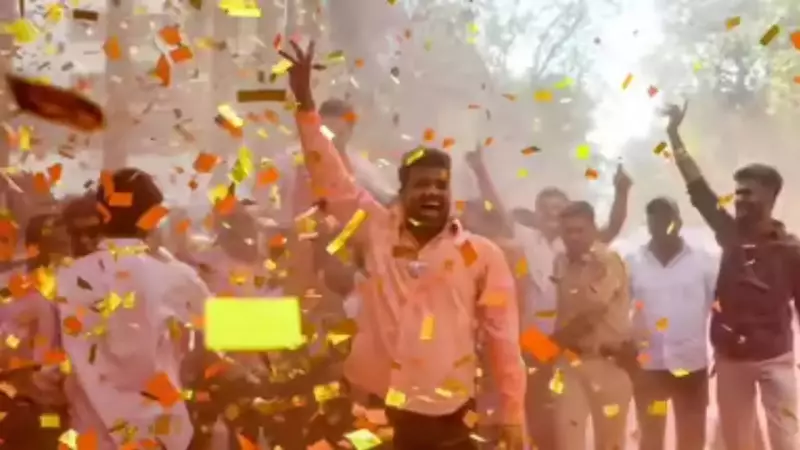
In a landmark democratic exercise that captured national attention, "bhari kursi" (occupied chair) triumphed over "khali kursi" (empty chair) in Deori on Tuesday. Voters in this Sagar district town chose continuity over recall, allowing municipal chairperson Neha Alkesh Jain to retain her position in Madhya Pradesh's first right-to-recall verdict since the law's revival last year.
Official Results Confirm Voter Preference for Continuity
According to officials from the State Election Commission, the counting held on January 21 revealed a clear preference among voters. The "occupied chair" option secured 7,282 votes, while the "empty chair" alternative polled 6,085 votes. This decisive outcome emerged from a total of 13,367 votes cast during the civic poll conducted on January 19.
The election effectively sealed the fate of a rare democratic experiment that once again highlighted Madhya Pradesh's distinctive accountability mechanism. The voter turnout reached an impressive 69.3% across 30 booths in 15 wards, a figure unusually high for a civic recall exercise that underscored the significant stakes involved.

Political Turmoil Precedes Historic Verdict
The Deori verdict brought closure to months of political uncertainty in the Sagar district town, where Jain's position had remained precarious due to internal dissent and legal complications. Earlier, thirteen of the fifteen elected councillors had expressed no confidence in her leadership, triggering the recall process under provisions that were restored by the state government in 2025 after a seven-year hiatus.
Jain's political journey faced additional challenges when the urban administration department attempted to remove her from office. However, she secured a court stay and successfully returned to her position, ultimately surviving what many observers viewed as a direct test of her public legitimacy and support among constituents.
Understanding Madhya Pradesh's Right-to-Recall System
Madhya Pradesh's right-to-recall system, first introduced in the year 2000, presents voters with a unique symbolic choice rather than traditional candidate competition. Instead of selecting between rival candidates, voters are asked to choose between an empty chair and an occupied one. A vote for the empty chair results in the incumbent's removal and triggers fresh elections, while a vote for the occupied chair allows the elected official to continue serving their term.
In Deori's specific case, the Electronic Voting Machine (EVM) display featured a woman seated on the chair, accurately reflecting the incumbent's gender. This visual representation helped voters make an informed decision about whether to retain their current municipal leadership or opt for change through the recall mechanism.
Implications for Democratic Accountability
The successful implementation of this recall process demonstrates how citizens can directly influence local governance through established legal frameworks. The high voter turnout suggests strong civic engagement and awareness about the accountability mechanisms available to them. This verdict sets an important precedent for future right-to-recall exercises across Madhya Pradesh and potentially other states considering similar democratic innovations.
As municipal chairperson Neha Alkesh Jain continues her tenure following this public validation, the Deori verdict reinforces the importance of transparent governance and responsive leadership at the local level. The outcome highlights how democratic tools, when properly implemented, can strengthen the connection between elected representatives and the communities they serve.