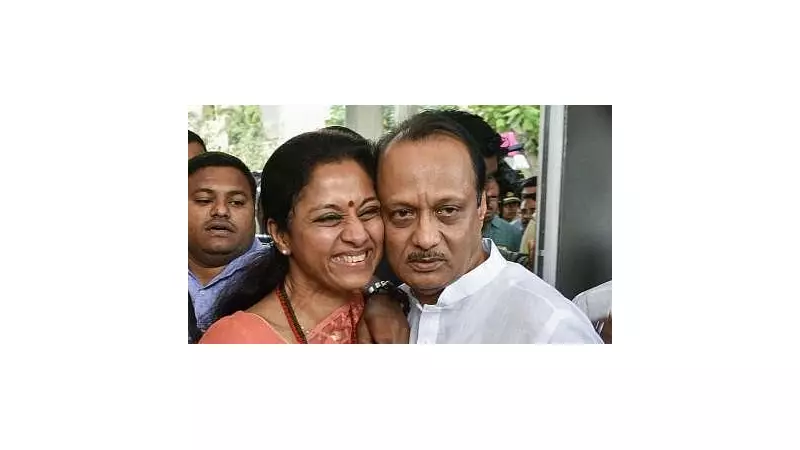
In a remarkable political development ahead of crucial municipal elections, the two rival factions of the Nationalist Congress Party (NCP) have decided to join forces. The groups led by Deputy Chief Minister Ajit Pawar and Baramati MP Supriya Sule put aside their state-level alliances to present a united front for the upcoming civic body polls in Pune and Pimpri Chinchwad.
An Unprecedented Alliance for Local Governance
The decision marks a significant departure from the current political landscape in Maharashtra. At the state level, Ajit Pawar's NCP is a constituent of the ruling Mahayuti coalition. In contrast, Supriya Sule's NCP (Sharadchandra Pawar), often referred to as NCP (SP), is part of the opposition Maha Vikas Aghadi (MVA). Despite this divide, both factions recognized a shared interest in the local elections scheduled for January 15, 2026.
The unity was on full display as the leaders shared a stage to release a joint election manifesto. This collaborative effort underscores the complex and often localized nature of Indian politics, where national and state-level rivalries can be set aside for municipal gains.

Focus on Pune and Pimpri Chinchwad Development
The joint manifesto is expected to focus on core civic issues plaguing the Pune Metropolitan Region. Voters in the Pune Municipal Corporation and the Pimpri Chinchwad Municipal Corporation will go to the polls on the same day. Key concerns likely addressed include urban infrastructure, water supply, waste management, and transportation.
By combining their organizational strength and voter bases, the NCP factions aim to secure a dominant position in these important urban local bodies. Pune, being a political stronghold and a major economic hub, holds considerable symbolic and administrative value.
Political Implications and Future Ramifications
This tactical alliance for the civic polls is being closely watched for its potential ripple effects. While it is currently confined to the local elections in two cities, it raises questions about the stability of the broader coalitions at the state level. The event demonstrates the personal and political influence of the Pawar family, which continues to be a central force in Maharashtra's politics.
Analysts suggest that the move is a strategic calculation to consolidate the traditional NCP vote bank, which may have been fragmented after the party's split. Presenting a united face locally could prevent the division of votes and help counter challenges from other major parties like the BJP, Shiv Sena, and Congress in these civic bodies.
The coming together of Ajit Pawar and Supriya Sule, despite their differences, highlights the primacy of ground-level electoral pragmatism. The results of the January 15 elections will not only determine the control of the civic bodies but also serve as a barometer for this unusual political experiment. Whether this cooperation remains a one-off event or sets a precedent for future political maneuvering remains to be seen.