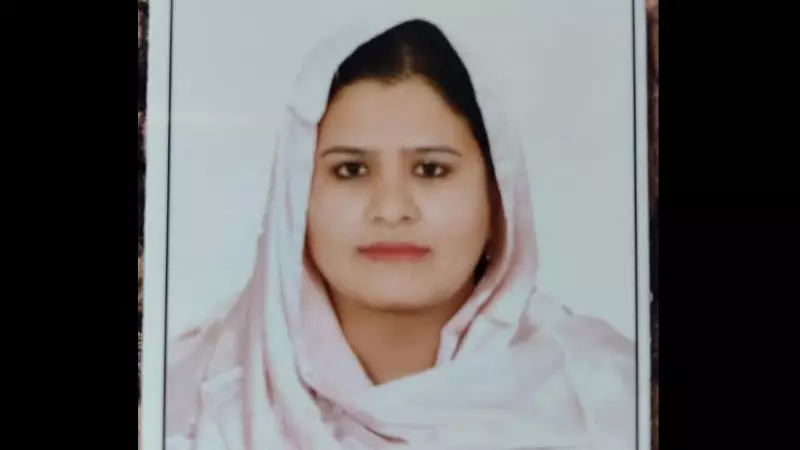
The upcoming Maharashtra municipal corporation elections in Nagpur have seen a remarkable entry. Alisha Khan, the 29-year-old wife of Fahim Khan, a key accused in the March 2025 Nagpur riots, has decided to contest from Ward 3D. Her candidature, filed on an All India Majlis-e-Ittehadul Muslimeen (AIMIM) ticket, is a direct response to what she describes as severe injustice meted out to her family following the communal violence.
A Personal Tragedy Fuels Political Ambition
In an exclusive conversation, Alisha Khan detailed the events that transformed her from a homemaker into a political candidate. Her husband, Fahim Khan, was arrested and spent four months in jail in connection with the riots before being granted conditional bail by a district and sessions court in July 2025. This period, she says, was a brutal education.
"Before this, I was only a housewife. I didn't know anything about politics," Alisha admitted, having studied only up to Class 10. "But in those four months while my husband was behind bars, I learned a lot—managing children, dealing with lawyers, and handling hardships." The ordeal did not end with the jail term. The family's house, registered under Fahim's mother's name, was demolished by authorities days after the riots, an action that occurred even before the Nagpur bench of the Bombay High Court could stay the demolition order the same day.

"We were served a notice about the demolition of illegal construction. On a holiday, our house was demolished, and despite a notice for 90 square feet, the entire structure was razed," she recounted. This sequence of events cemented her resolve. "After facing all this, I decided to fight elections so no one else goes through the same," she stated.
The Need for Political Power to Combat Injustice
Alisha Khan's central argument for entering the political arena is born from a sense of powerlessness. "We have seen how political wars destroy entire families. This has happened to us today; tomorrow it can happen to someone else," she said. Her key learning from the crisis was stark: "To raise your voice against injustice, political power is necessary. If you speak up without political backing, you get crushed just like how my husband was silenced."
Explaining her choice of party, she was candid about her options. She claimed the Bharatiya Janata Party (BJP) would never field her and accused the Indian National Congress of doing politics in the name of Muslims without nurturing genuine leadership from the community. "The AIMIM gives people like us a chance to come forward, speak, and raise our voice," she asserted. The party has fielded 17 candidates in Nagpur for the January 15 polls.
Focus on Civic Issues and Community Support
Beyond her personal narrative, Alisha is campaigning on pressing local issues in Ward 3D. She highlighted critical failures in basic amenities. "Filth and unhygienic conditions are at their worst here. The area lacks urgent medical facilities; the nearest hospital is 8 km away. Sanitation workers do not come regularly," she pointed out, adding that several decades-old settlements still await regularization despite promises.
Her husband, Fahim, echoed these concerns, emphasizing the chronic problem of monsoon flooding that has plagued the area for nearly 40 years. "Every year, there is severe flooding... the situation remains unchanged," he said. Despite the allegations against him, which he claims labelled him as "anti-national" and "Bangladeshi," Fahim says local support for his wife is growing. "People who know us personally, beyond media narratives, are supporting us. This is not a religiously divided vote," he insisted, noting that their ward is a mix of multiple communities.

Fahim fully supports his wife's candidacy, acknowledging her rapid transformation. "She might not be a powerful public speaker but has learned from experience," he said. "She learned how to survive amid the hardship and now wants to work for people, serve society, and respond to those who question her." As Nagpur heads to the polls, Alisha Khan's journey from a home confined by four walls to the public podium of a civic election encapsulates a turbulent intersection of personal grievance, political awakening, and a quest for justice.