Women Achieve Historic Majority in Nagpur Municipal Corporation
Nagpur witnessed a remarkable political shift as women emerged stronger than ever in the city's civic body. The newly elected 151-member Nagpur Municipal Corporation general body now has more women than men. This outcome reinforces the growing political clout of women in urban local governance.
Breaking Beyond Mandatory Reservations
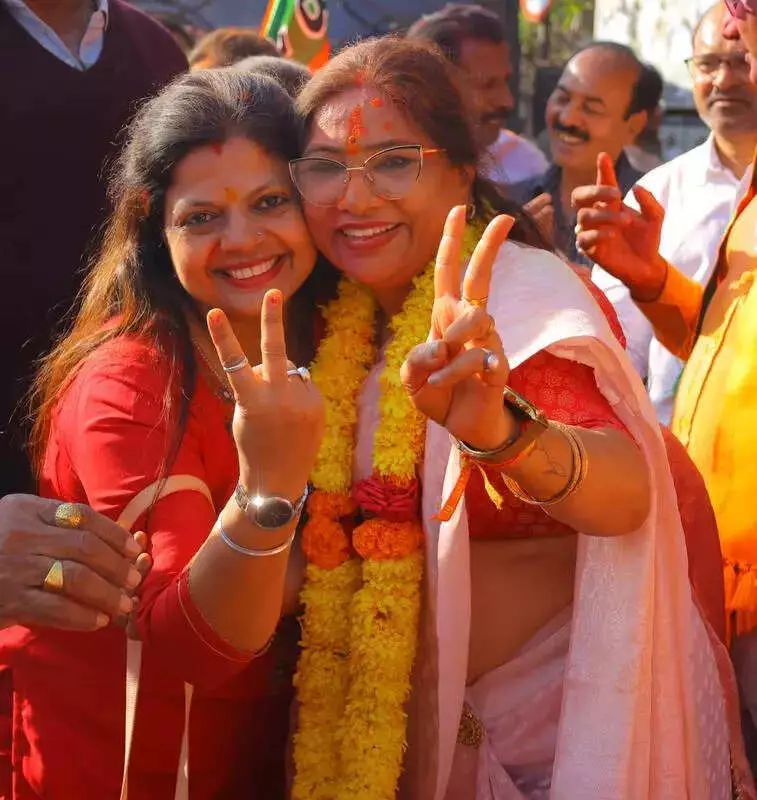
Of the total strength, voters elected 78 women corporators against 73 men. This marks a significant milestone in Nagpur's civic politics. The achievement becomes more notable because it went beyond the mandatory reservation of 76 seats for women.
Two women candidates won from open seats by defeating male opponents. This underlines an important development. Women leaders are no longer confined to quota politics. They are winning elections on merit and mass appeal.

High-Profile Victories and Party-wise Distribution
Among the most high-profile victories, Congress candidate Manjusha Chacharkar defeated BJP's veteran corporator Bhushan Shingne in Prabhag 11. This delivered a major upset in the elections.
In another significant contest, former mayor and seasoned BJP leader Maya Iwnate won from Prabhag 12. She defeated her male rival and reaffirmed her strong political standing in the city.
BJP retained control of the Nagpur Municipal Corporation. The party has the highest number of women corporators. Of its 102 seats, 54 are women and 48 men. This indicates a near gender balance that actually tilts in favour of women.
The Congress party secured 34 seats. Among these, 15 are women and 19 are men. AIMIM showed stronger female representation with 4 women and 2 men among its 6 winners.
The Indian Union Muslim League achieved an equal split with 2 men and 2 women. Smaller parties and independents have limited representation in the current setup.
Continuing a Positive Trend
This is not the first time women have asserted themselves in Nagpur's municipal politics. In the 2017 general body, women occupied 84 seats. Among these, 76 came through reservation and 8 from the open category.
That trend challenged the perception that women could win only on reserved seats. The current outcome, though numerically slightly lower, again proves an important point. Women candidates continue to remain electorally competitive in urban local bodies.
Ground-Level Performance Drives Voter Preference
Voters' preference for women candidates in Nagpur appears rooted in practical considerations. Ground-level performance and credibility matter more than symbolism according to local observers.
"In many prabhags, women corporators were seen as more accessible, responsive, and consistent in addressing everyday civic issues," said NCP Ajit Pawar camp corporator Abha Pande from central Nagpur.
She specifically mentioned issues like sanitation, water supply, roads, and welfare schemes. Several women candidates had built strong connections through community work. They engaged with self-help groups, mahila mandals, health drives, and grievance redressal activities.
This grassroots work gave them an edge over male rivals. Male candidates were often perceived as distant or driven by factional interests.
Changing Voter Perceptions and Campaign Strategies
Anti-incumbency against sitting male corporators also played a role in the election results. Voters opted for women as a clean break from entrenched local power networks.
"Importantly, urban voters no longer view women as proxies," said former mayor Maya Iwnate. "Repeated electoral exposure since reservation was introduced has normalised women in leadership roles."
Campaign styles made a difference too. Many women ran focused, door-to-door campaigns centered on local issues rather than political rhetoric. Collectively, these factors indicate a significant shift in voter behavior.
Trust, work visibility, and accountability outweighed gender considerations. This made women the preferred choice in closely fought contests across the city.
Broader Implications for Urban Governance
Political observers say the results reflect greater voter acceptance of women leadership. This is particularly true in urban wards where civic performance matters most.

Accessibility and local engagement have become more important than gender in determining electoral outcomes. With women now forming the numerical majority in the House, their role will expand significantly.
Their participation in policy-making, standing committees, and key civic decisions is expected to increase. This development could potentially reshape power dynamics within the Nagpur Municipal Corporation over the next five years.
The election results signal a maturing of urban democracy in Nagpur. Voters are making choices based on performance rather than traditional considerations. Women leaders have demonstrated their capability to connect with constituents and address local issues effectively.