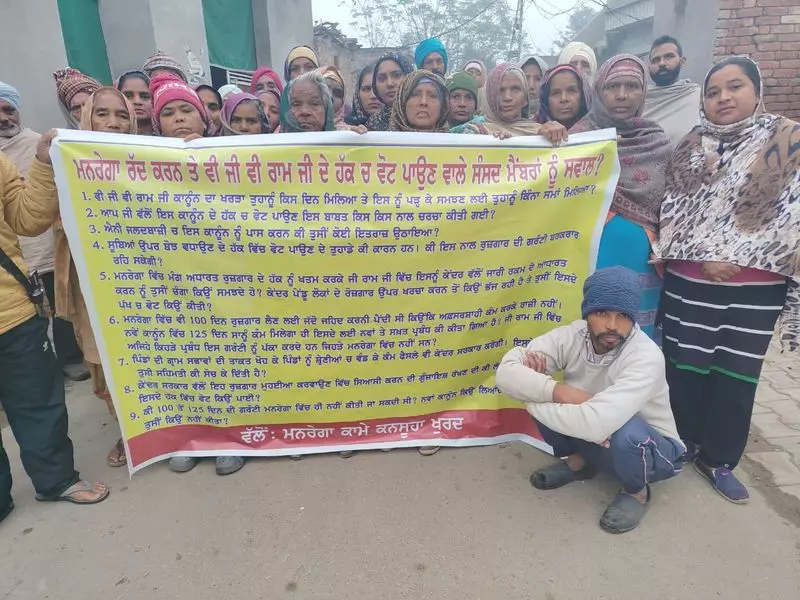
Villagers from the Nabha region of Punjab staged a direct and tense confrontation with local Members of Parliament on Sunday, demanding clear answers regarding proposed amendments to the Sikh Gurdwara Act, 1925. The gathering, which saw participation from residents of over a dozen villages, highlighted growing anxiety within the community about potential government interference in the management of Sikh shrines.
Direct Questions, Evasive Answers
The event, organized at Gurdwara Singh Sabha in Bhadson, saw villagers pose pointed questions to MPs Dharamvir Gandhi (Patiala) and Sadhu Singh (Faridkot). The central concern revolved around the Shiromani Gurdwara Parbandhak Committee (SGPC) and the perceived threats to its autonomy. Villagers expressed a firm belief that any changes to the Act could pave the way for increased state control over gurdwara affairs, a prospect they vehemently oppose.
Despite the villagers' urgent pleas for clarity, the responses from the parliamentarians were reportedly evasive. Attendees noted that the MPs failed to provide concrete assurances or detailed explanations about the government's stance or legislative agenda concerning the Act. This lack of straightforward answers only served to heighten the frustration and suspicion among the gathered crowd.
Community Fears and Historical Context
The apprehension in Nabha is not occurring in a vacuum. It stems from a long-standing and deeply held sentiment within the Sikh community to protect the SGPC as an independent, religious body elected by Sikhs alone. The SGPC, established by the Gurdwara Act of 1925, manages historic gurdwaras primarily in Punjab, Haryana, and Himachal Pradesh. Any move perceived as diluting its authority is met with immediate resistance.
Speakers at the gathering, including local leaders and activists, framed the issue as a matter of religious sovereignty. They argued that amendments could be a backdoor method for the current political dispensation to influence or control the committee's decisions, its finances, and its electoral process. The fear is that this would undermine the very purpose of the SGPC, which was born out of a struggle to free gurdwaras from corrupt mahants during the Gurdwara Reform Movement.
Political Repercussions and Future Action
The confrontation in Nabha signals a significant political challenge for representatives in the region. The villagers made it clear that their support in future elections would be contingent on where their MPs stand on this critical issue. The event has effectively put local politicians on notice, forcing them to choose between party lines and the clear demands of their constituents.
Following the unsatisfactory responses, the community has decided to intensify its campaign. Plans are being made to organize larger protests and awareness drives to mobilize Sikhs across Punjab. The villagers of Nabha have vowed to take their questions and demands to higher authorities if their local representatives continue to remain non-committal. This grassroots movement underscores a potent mix of faith, identity, and political assertion that is likely to resonate beyond the immediate vicinity.
The situation remains fluid, with the ball now firmly in the court of the political representatives. Whether the government will bring any formal amendments to the Gurdwara Act is unknown, but the reaction from Nabha demonstrates that any such move will be met with organized and passionate opposition from the Sikh community, setting the stage for a major socio-political debate in Punjab.