Mumbai's Ward 90: A Microcosm of Diverse Demands
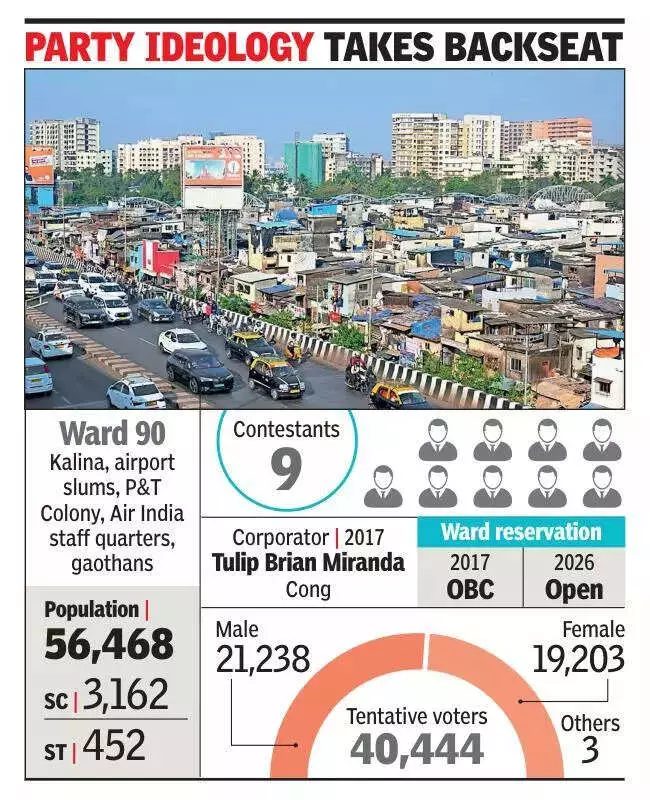
Mumbai's Kalina area, specifically Ward 90, stands out with one of the most varied voter profiles in the city. This electoral segment blends centuries-old gaothans, airport-adjacent slum pockets that form the largest voting bloc, staff quarters including four Air India colonies, and modern residential societies. The ward's social and religious diversity creates a complex political landscape.
Nine Candidates, One Ward
With nine candidates competing and over 40,000 voters spread across these neighborhoods, the contest is decidedly multi-cornered. Party ideology takes a backseat here. Local credibility and concrete responses to everyday civic problems drive voter sentiment. Candidates must address immediate community needs to win support.
Candidates Highlight Pressing Local Issues
Congress candidate Tulip Miranda, the sitting corporator elected in 2017, identifies contaminated water in slum pockets like Shastri Nagar as the ward's biggest concern. Her husband, Brian Miranda, points to the growing nuisance of illegal hawking and chaotic parking. "Many autorickshaw and taxi drivers staying in these pockets are parking their vehicles haphazardly," he states, highlighting a daily inconvenience for residents.

Independent candidate George Abraham, campaigning with the autorickshaw symbol, leverages his deep roots and prior civic experience. Born and raised in Kalina, he has won all three BMC elections he contested from here. He recalls a seven-day hunger strike in the 1990s to secure electricity for slum residents. Today, he says the most urgent issue is eviction threats near the airport. "This is despite them being here prior to 2000 and are, therefore, protected under the SRA scheme," he argues. He also lists water contamination, supply woes, and damaged toilets and drains as critical problems needing attention.
BJP nominee Jyoti Upadhyay attacks the Congress's record, alleging corruption. She claims residents still face basic civic problems despite repeated assurances. Her priorities include ensuring safe, reliable drinking water and making Kalina drug-free, citing youth drug addiction as a major local issue.
Shiv Sena (UBT) candidate Masood Ansari, a former Congress corporator from a neighboring ward, believes familiarity with local issues matters more than past ward boundaries. He points to bad roads, low water pressure, contaminated water, and sewage problems in Shastri Nagar and other slum areas.
Aam Aadmi Party debutant Suresh Acharya lists water, drainage, and public toilets as top concerns. He criticizes 15 years of Congress governance, citing the inadequate Shastri Nagar toilets where women have only a curtain for privacy. His focus is on dignity and basic services. He also flags erratic water supply in Kalina village and gaothans, where senior citizens wake up at 3 AM to collect water, and notes the absence of a mohalla clinic in Kalina.
Samajwadi Party candidate Sana Qureshi, who runs a private primary school, says Shastri Nagar, Chunabhatti, and Indira Nagar face persistent problems like poor water supply and dilapidated public toilets. Her campaign prioritizes basic amenities and expanding education and skill development opportunities for girls.
The Core of the Contest
The election in Ward 90 transcends traditional party lines. It is a battle fought on the ground, centered on hyper-local grievances. From water woes and sanitation to eviction fears and parking chaos, candidates are scrambling to prove their ability to deliver tangible improvements. The diverse electorate, with its mix of old settlements and newer communities, demands solutions that address their specific, everyday struggles. This ward exemplifies how Mumbai's local politics often hinges more on civic accountability than on broader national narratives.