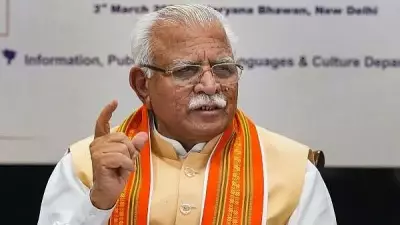
A deep-seated factional rift within the Madhya Pradesh Congress unit came to the fore this weekend, leading to the dramatic resignation and subsequent reinstatement of the party's state media department chairman, Mukesh Naik. The controversy erupted over the constitution of a committee to hunt for new spokespersons, exposing internal discord between senior and younger leaders.
The Resignation That Shook The Party
The political drama unfolded on Saturday when senior Congress leader and former minister Mukesh Naik submitted his resignation from the post of state Congress media cell chairman. This sudden move followed a bitter exchange related to the formation of the party's Talent Hunt Committee, an initiative by the All India Congress Committee (AICC) to identify capable new spokespersons.
In his resignation letter addressed to Madhya Pradesh Congress Committee (MPCC) President Jitu Patwari, Naik referenced his own earlier remarks. "Yesterday at the working committee meeting I said that the old brigade of the party should leave to make place for younger people. I am willingly resigning from the post," he wrote. He praised Patwari as a "hard-working, honest and capable state party president" and extended his good wishes.

A Rejection and a Swift Rollback
However, the state leadership moved quickly to contain the fallout. State Congress President Jitu Patwari did not accept Mukesh Naik's resignation. Later on the same day, a formal letter from state PCC organisational general secretary Sanjay Kamle clarified the situation. The letter stated that Mukesh Naik would continue in his role as the chairman of the state party's media department, effectively nullifying his resignation.
Roots of the Conflict: The Talent Hunt Committee Tussle
The genesis of the conflict lies in the AICC's directive for a Talent Hunt for new spokespersons. The national media department had instructed every state unit to form a Talent Hunt Coordination Committee, with the state media department chairman serving as the ex-officio coordination head. In Madhya Pradesh, this chairman is Mukesh Naik, while the media in-charge is the younger leader Abhay Tiwari.
The trouble began when the first list for this committee, featuring 11 members, was issued by organisational general secretary Sanjay Kamle on December 9. This list included prominent names like newly appointed Mahila Congress President Reena Borasi, state Youth Congress chief Yash Ghanghoria, and several party spokespersons.
The AICC, however, objected, pointing out that the committee was supposed to be appointed by the media department chairman, Mukesh Naik. Following this, Naik delegated the task of forming the committee to state media in-charge Abhay Tiwari. When the new list was prepared, it was found lacking minority and tribal representation. To rectify this, Naik himself added the names of Jhabua MLA Vikrant Bhuria and Bhopal Central MLA Arif Masood on December 23 and signed off on the final list.
The situation escalated when Abhay Tiwari took to internal party social media platforms, alleging that "some people are conspiring" against the party. Late on Friday evening, Tiwari issued an official letter cancelling Naik's December 23 order (MPCC/0018/2025), citing a "lack of competent approval and practical strength." This direct challenge led to Naik putting in his papers on Saturday morning.
Political Fallout and BJP's Jab
The internal squabble did not go unnoticed by the opposition. The state Bharatiya Janata Party (BJP) seized the opportunity to criticise the Congress. In a sharp jibe, the BJP stated, "The Congress party internal feud is out in the open. The Mukesh Naik resignation incident shows how senior leaders in the party are humiliated and neglected." They further claimed that this is why a senior leader like Naik felt compelled to resign, alleging that the Congress is a party where only sycophants thrive while good functionaries are sidelined.

The episode highlights the ongoing tension between different generations and power centres within the Madhya Pradesh Congress, even as the party attempts to rejuvenate its ranks through initiatives like the Talent Hunt. While the immediate crisis has been averted with Naik's reinstatement, the underlying factionalism remains a significant challenge for the state leadership.