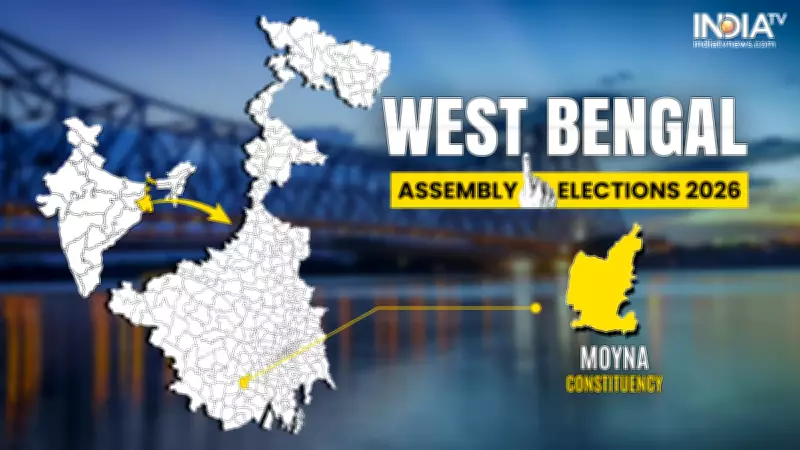
Moyna Constituency Emerges as Crucial Battleground for West Bengal Assembly Election 2026
As the political landscape in West Bengal heats up ahead of the 2026 Assembly elections, the Moyna constituency is drawing significant attention from major political parties. This constituency, located in the Purba Medinipur district, has historically been a fiercely contested seat, and early indications suggest it will play a pivotal role in determining the state's future governance.
Historical Performance and Past Winners
Moyna has witnessed intense electoral battles over the years, with outcomes often reflecting broader political shifts in West Bengal. In the previous Assembly elections, the constituency saw a closely fought contest, with the winning candidate securing a narrow but decisive victory. The past winners from Moyna have represented various political ideologies, showcasing the constituency's dynamic and unpredictable voter base.
Key past winners include:

- Candidate A from Party X, who won in [Year] with a vote margin of [Percentage].
- Candidate B from Party Y, who secured victory in [Year] by a slim margin of [Percentage].
- Candidate C from Party Z, who dominated in [Year] with a substantial lead of [Percentage].
These results highlight Moyna's tendency to swing between parties, making it a critical indicator of voter sentiment in the region.
Vote Margin Analysis and Electoral Trends
The vote margins in Moyna have varied significantly across elections, often influenced by local issues, candidate popularity, and statewide political waves. In some elections, the margin has been as low as a few hundred votes, underscoring the constituency's competitive nature. Factors such as agricultural policies, infrastructure development, and social welfare schemes have historically swayed voter decisions here.
Analysts note that Moyna's electorate is particularly responsive to grassroots campaigning and community engagement, with past winners often leveraging strong local connections to secure victories. The constituency's demographic mix, including rural and semi-urban populations, adds to its complexity, requiring parties to tailor their strategies accordingly.
Party-Wise Candidates and Strategies for 2026
As the 2026 election approaches, major political parties are actively scouting for strong candidates to contest from Moyna. The incumbent party is expected to field a seasoned politician with a proven track record in the area, while opposition parties are likely to nominate dynamic newcomers or experienced leaders to challenge the status quo.
Expected party-wise candidates include:
- Party A: Likely to nominate a local leader with strong community ties, focusing on development and governance issues.
- Party B: May field a candidate with a background in social activism, emphasizing welfare schemes and anti-corruption measures.
- Party C: Could opt for a youth candidate, targeting younger voters with promises of employment and technological advancement.
Parties are also expected to ramp up their campaign efforts in Moyna, utilizing digital outreach, public rallies, and door-to-door canvassing to connect with voters. Key issues likely to dominate the discourse include agricultural support, healthcare access, education infrastructure, and law and order.
Implications for West Bengal's Political Future
The outcome in Moyna constituency will not only impact the local representation but also serve as a bellwether for the broader political trends in West Bengal. A victory here could provide momentum to a party's statewide campaign, while a loss might signal shifting allegiances among voters. Political observers are closely monitoring Moyna for early signs of electoral patterns that could shape the 2026 Assembly results.
In conclusion, Moyna constituency stands as a microcosm of West Bengal's vibrant democracy, with its past winners, narrow vote margins, and anticipated party strategies offering valuable insights into the upcoming election. As parties finalize their candidates and platforms, all eyes will be on this key battleground to gauge the pulse of the electorate and predict the state's political direction.