Mosques Echo with Civic Alerts Instead of Prayer Calls
In the towns of Najibabad, Sherkot, Nagina, and Dhampur, the familiar sound of the azaan now shares space with urgent civic announcements. Mosque loudspeakers crackle with measured, insistent voices urging residents to gather documents and fill out forms before it's too late. The repeated phrase "Der na karein, zaroori hai" (don't wait, this matters) has become a new refrain across Muslim-majority neighborhoods.
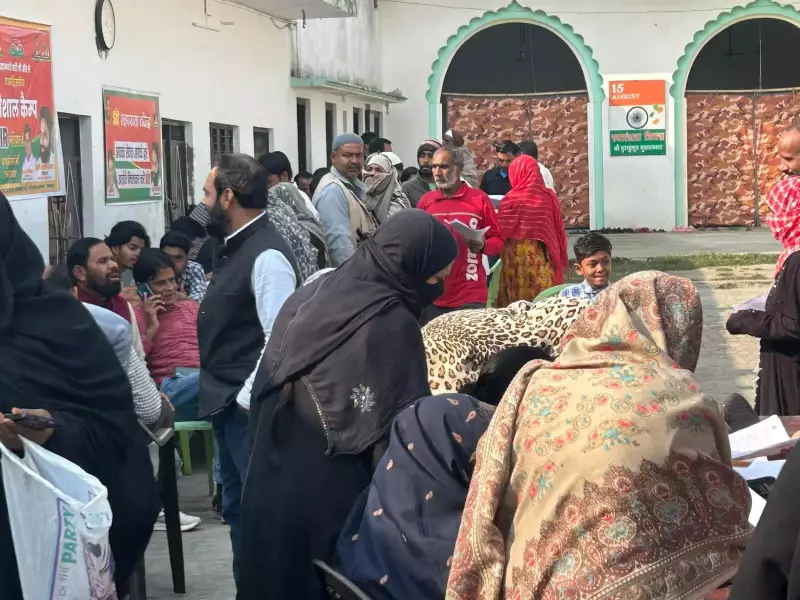
While officials describe this as routine preparation for the 2027 assembly elections, communities still bearing the scars of CAA and NRC debates approach the exercise with significant anxiety. The documentation process has unfolded in mosque courtyards, near madrasa gates, and under tents along quiet lanes where residents wait with plastic envelopes containing their most precious papers.
Grassroots Assistance Emerges from Community Spaces
At these makeshift camps, volunteers work in pairs—one operating a phone while the other guides applicants through each line of the forms. Signs tacked to bamboo poles simply state: "Form bharne mein madad yahan milegi" (help available here for form filling). For many residents, these community-run centers represent the only guidance they trust.

Imam Mohammad Abrar never anticipated becoming a civic announcer. "People came after prayer, confused. Some were afraid," he explains. "That's when I started speaking from the loudspeaker—explaining what this form is and what documents to bring. When a form affects someone's identity, the mosque cannot stay silent."
The scale of the effort has surprised even the volunteers. Nadeem, a college student helping in Najibabad, notes: "We thought we'd help a few neighbors. Now people are coming from five localities. Some don't even know what form they're here for—they just know it matters."
Lifetime Documents and Shared Uncertainties
At a table near the back of one assistance center, Fatima, a widow in her 50s, clutches a plastic envelope to her chest containing birth certificates, school IDs, board marksheets, and a yellowing land deed. "Zindagi bhar ke kaagaz hain isme," she says—documents from a lifetime. "Bas dua hai ki kaafi ho," she adds softly, hoping they will be enough.
Ejaz Ahmad, president of the Uttar Pradesh Madrasa Education Association, explains this widespread uncertainty stems from past experiences. "When identity documents are involved, people remember the past. NRC, Aadhaar, welfare cut-offs—these things leave a mark. People need someone who helps without asking too many questions. That's why the mosque matters."
The assistance extends beyond form filling. After Friday prayers, imams repeat reminders about documentation. Madrasa students help residents scan QR codes, upload PDFs, and correct spelling mismatches. In some camps, volunteers maintain handwritten lists of common errors, while elsewhere, a single printer hums for hours, fed by donated paper and shared nervousness.
Government Workers and Community Volunteers Join Forces
BLO Salma Parveen, working in Bijnor's Muglushah locality, has processed over 350 forms in just three days. She warns applicants against using correction fluid, which could get forms rejected. Working since dawn, she has switched to paper lists when online portals crash in the afternoons. "People are scared, so they double-check every line," she observes. By evening, her pencil wears down to a stub as supervisors call for nightly updates and SDM and DM offices expect daily reports.
Informal helpers fill critical gaps in the system. In Bijnor's Rampura area, a narrow lane of barbers and butchers features a photocopy shop with constant queues. Owner Javed helps 200-250 people daily, understanding that "No vote, no voice" underscores the urgency. In Meerut, a mobile recharge shop now functions as a documentation corner, its printer whirring constantly as residents inquire about ward codes, father's name spellings, and missing records.

Common challenges emerge repeatedly: women married after 2003 seeking parental documents, relatives searching through old trunks for brittle papers, and migrants facing language barriers. Nafisa, originally from Bengal and married into Najibabad, finally located her father's papers—written in Bangla. A volunteer translated them line by line using a phone app.
As Ansar, a ward worker, summarizes: "We're helping everyone, one by one. But one thing is constant: no one wants to be left out." Across these Uttar Pradesh towns, the convergence of civic duty and community solidarity continues, with mosques serving as unexpected but vital bridges between residents and the documentation that defines their identity and rights.