The Moscow Connection That Changed Bihar's Political Destiny
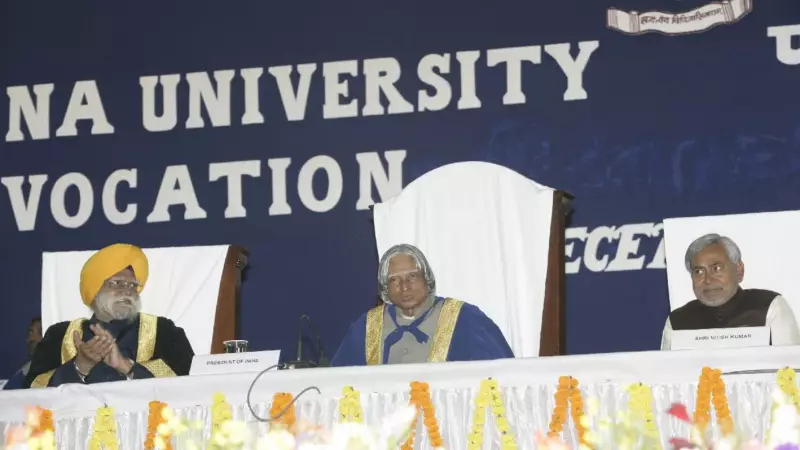
On May 22, 2005, President APJ Abdul Kalam arrived in Moscow, beginning an 11-day multi-country tour. Little did he know that this Russian capital would become the backdrop for a decision that would shape Bihar's political landscape for the next two decades.
Before President Kalam could settle into his suite at the Kempinski Hotel, he received a crucial phone call from Prime Minister Dr. Manmohan Singh. It was around midnight in Delhi when the PM informed the President that the Union Cabinet had decided to recommend the dissolution of the newly elected Bihar Legislative Assembly.
The Political Chessboard of 2005 Bihar Elections
The February 2005 Bihar Assembly elections had produced a fractured mandate. The RJD emerged as the single-largest party with 75 seats, followed by Nitish Kumar's JD(U) with 55 MLAs. The BJP secured 37 seats, while Ram Vilas Paswan's LJP won 29. Seventeen Independent candidates also won seats.
What made this election particularly significant was that the NDA campaign, crafted by Arun Jaitley and Nitish Kumar, had initially begun without a chief ministerial face. After the first phase of voting, Jaitley convinced the BJP leadership that declaring Nitish as the CM face would yield electoral benefits in the remaining phases.
Despite this strategic move, the NDA fell short of the majority mark of 122 seats in the 243-member Assembly, setting the stage for political maneuvering.
Governor Buta Singh's Controversial Role
The political drama unfolded in the office of Bihar Governor Buta Singh, a 71-year-old Congress veteran who had taken charge in November 2004. With an inconclusive mandate, various political players approached the Governor with their claims and conditions.
Paswan's LJP declared they would not support either the RJD or the BJP in government formation. The BJP informed the Governor about their numbers and requested him not to invite the RJD. Several other parties also expressed unwillingness to support either major alliance.
Governor Singh submitted three reports to President Kalam. In his final report, he claimed that 17-18 LJP MLAs were moving to the JD(U), which would distort the verdict of the people. He recommended dissolving the Assembly and holding fresh elections.
The Constitutional Crisis and Its Aftermath
The Cabinet's decision to dissolve the Bihar Assembly led to President's rule in the state. NDA leaders protested by marching to Raisina Hill and presenting a memorandum to the President, claiming that 22 LJP MLAs had decided to merge with JD(U) due to ideological contradictions.
The matter reached the Supreme Court, which in October 2005 - just days before Bihar went to polls for the second time that year - declared the President's dissolution of the Bihar Assembly unconstitutional.
The October 2005 elections produced a clear verdict. Nitish's JD(U) increased its tally from 55 to 88 seats, the BJP rose from 37 to 55, while the RJD was relegated to third place with 54 MLAs. The LJP suffered significant losses, dropping from 29 to just 10 seats.
The Beginning of Nitish Kumar's Era
In November 2005, Nitish Kumar was sworn in as Bihar Chief Minister, marking the beginning of what would become nearly two decades of uninterrupted leadership, save for a brief nine-month gap. This momentous event had its roots in that fateful phone call to Moscow.
The consequences extended beyond Bihar politics. Governor Buta Singh was indicted by the Supreme Court and subsequently resigned, while President Kalam considered resigning as the judgment recast his relationship with the government.
Today, as Nitish Kumar completes 20 years as Bihar's chief minister with nine oath-taking ceremonies, the Moscow phone call remains a pivotal moment in Indian political history, demonstrating how international diplomacy and domestic politics can unexpectedly intersect.