MNS Extends Support to Shinde's Shiv Sena in Kalyan Dombivli, Altering Civic Power Dynamics
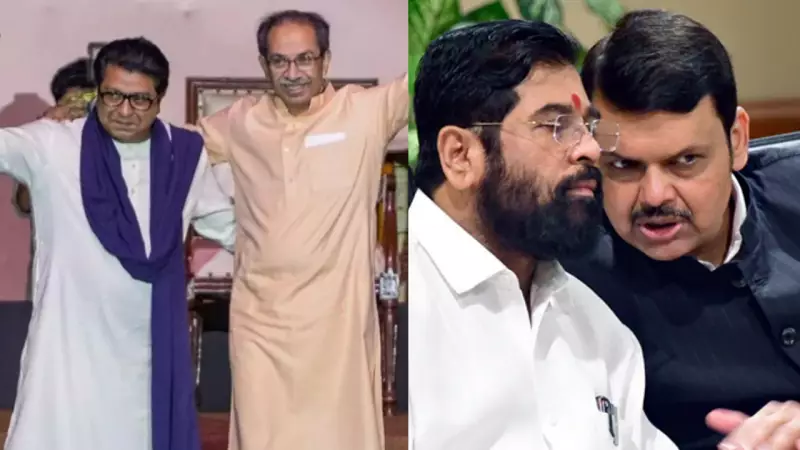
In a development that has reshaped the political landscape of Maharashtra's civic bodies, five corporators from the Maharashtra Navnirman Sena (MNS), led by Raj Thackeray, have declared their support for Eknath Shinde's Shiv Sena faction within the Kalyan Dombivli Municipal Corporation (KDMC). This strategic move, announced on Wednesday, significantly strengthens the ruling Mahayuti alliance, which includes the Bharatiya Janata Party (BJP), and deals a notable blow to the Uddhav Thackeray-led Shiv Sena (UBT).
A Setback for Uddhav Thackeray's Faction
The decision by MNS corporators to back the Shinde faction is particularly embarrassing for the Shiv Sena (UBT), as both parties had contested the recent municipal elections together in an alliance. In the KDMC, the Uddhav Thackeray faction managed to secure eleven seats, while the Congress and the Nationalist Congress Party (Sharadchandra Pawar) won two and one seats respectively. The new alignment effectively isolates the UBT from its former partner, highlighting the fluid nature of Maharashtra's political equations.
With this support, the Mahayuti alliance now commands a formidable majority in the 122-member KDMC House. Eknath Shinde's Shiv Sena emerged as the single largest party with fifty-three seats, closely followed by its ally, the BJP, which holds fifty seats. The addition of five MNS corporators brings the alliance's total to one hundred and eight members, well above the simple majority mark.

Political Reactions and Stability Concerns
In response to this unexpected development, Shiv Sena (UBT) Member of Parliament Sanjay Raut met with MNS chief Raj Thackeray on Thursday. Raut expressed the party's displeasure and discussed the evolving political scenario in Kalyan-Dombivli, indicating the tension within the erstwhile allies. The meeting underscored the strategic recalibrations occurring behind the scenes as parties position themselves for upcoming mayoral elections.
Local MNS leader and former MLA Raju Patil clarified that the decision to support the Mahayuti was driven by a desire to ensure political stability within the municipal corporation. "The MNS has chosen to back the Mahayuti alliance to maintain stability and prevent chaos in the functioning of various civic committees," Patil stated, emphasizing that the move was not motivated by personal interests and had received approval from party chief Raj Thackeray. He warned that a hung House could have disrupted administrative processes and hindered effective governance.
Implications for Mayoral Elections and Beyond
Shiv Sena MP from Kalyan, Shrikant Shinde, confirmed that fifty-three corporators from his party have submitted letters regarding the formation of their group in the KDMC. He announced that the Shiv Sena, BJP, and MNS would jointly elect the mayor as a Mahayuti candidate. This collaboration marks a significant consolidation of power ahead of crucial civic leadership selections.
Furthermore, Shinde revealed that in the neighboring Ulhasnagar Municipal Corporation, the Shiv Sena, BJP, Vanchit Bahujan Aghadi (VBA), Secular Alliance of India (SAI), and independent members would collectively elect the mayor. When questioned about the possibility of Shiv Sena securing the mayor's post in Mumbai, Shinde expressed optimism, noting that such an outcome would be welcomed by many.
Broader Impact on Mumbai's Civic Politics
This realignment in KDMC has introduced a new dimension to the contest for the Brihanmumbai Municipal Corporation (BMC) mayor's post. The Thackeray brothers—Uddhav and Raj—had joined forces during the BMC polls but were unable to surpass the BJP–Shiv Sena (Shinde) alliance, which secured one hundred and eighteen seats, exceeding the majority threshold of one hundred and fourteen.
With Shiv Sena (UBT) holding sixty-five seats and the MNS winning six in Mumbai, the post-election alliances in other civic bodies, including KDMC, gain heightened political significance. These developments are poised to influence strategies and negotiations as parties vie for control in the country's wealthiest municipal corporation, setting the stage for intense political maneuvering in the days ahead.

The evolving dynamics underscore the complex and often unpredictable nature of Maharashtra's civic politics, where alliances can shift rapidly, reshaping governance and administrative priorities at the local level.