MNS Support to Shinde Sena in KDMC Creates Political Rift with Sena (UBT)
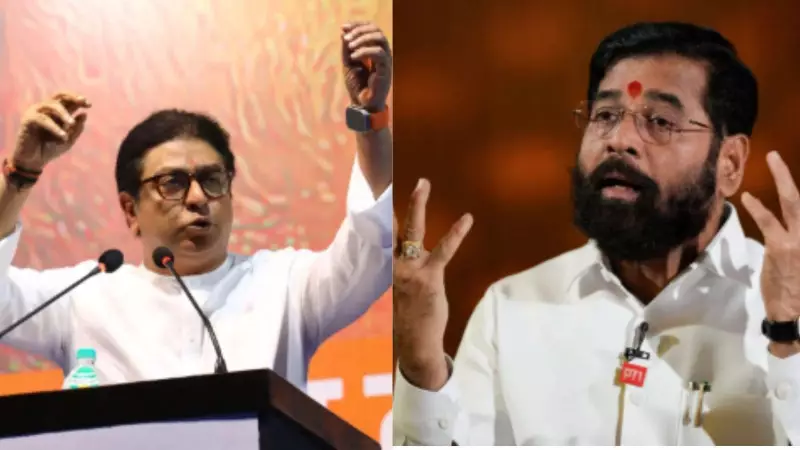
The political landscape in Maharashtra has witnessed a significant development as the Maharashtra Navnirman Sena (MNS) has decided to extend its support to the Eknath Shinde-led Shiv Sena in the Kalyan-Dombivli Municipal Corporation (KDMC). This post-poll alliance has created considerable strain in the relationship between MNS and the Shiv Sena (UBT), led by Uddhav Thackeray.
Background of the Political Maneuver
Interestingly, the MNS and Shiv Sena (UBT) had contested the recent KDMC elections together as allies. However, following the announcement of election results, the MNS made a strategic shift by offering support to the Shinde faction. This unexpected move has triggered strong reactions from leaders within the Shiv Sena (UBT), who view this as a breach of trust and a deviation from their pre-election understanding.
Reactions from Shiv Sena (UBT) Leadership
Uddhav Thackeray, the chief of Shiv Sena (UBT), has reportedly expressed deep disappointment over the MNS decision. According to party sources, Thackeray conveyed to Sena (UBT) corporators from KDMC that the party would now sit in the opposition while assuring them of complete support. He emphasized that had both parties remained united, KDMC could have witnessed a formidable opposition force.

Thackeray reportedly stated that the MNS move was unnecessary and could have been avoided, highlighting the potential for stronger opposition collaboration.
Sanjay Raut, the prominent Shiv Sena (UBT) MP, reacted sharply to the developments. He declared that what transpired in Kalyan was unacceptable and had significantly damaged the trust between the two parties. Raut asserted that alliances forged before elections should not be broken after results are declared.
He further commented that local leaders responsible for such decisions should face appropriate action from the MNS leadership. Raut revealed plans to discuss this matter internally with Raj Thackeray, the MNS chief, indicating ongoing diplomatic efforts to address the situation.
Internal Divisions Within MNS
The decision has elicited mixed reactions within the MNS itself, revealing internal divisions regarding the political strategy.
Bala Nandgaonkar, a senior MNS leader, expressed his dissatisfaction with the move. He confirmed that a meeting between Sanjay Raut and Raj Thackeray had indeed taken place. While personally disapproving of what occurred in KDMC, Nandgaonkar acknowledged that political parties sometimes make decisions based on local equations and circumstances.
He remarked, "In politics there are no permanent enemies or friends. Anything can happen in politics. But unethical practices should not be tolerated." Nandgaonkar suggested that Raju Patil, who oversaw the decision-making process, must have consulted with Raj Thackeray about the strategic shift.
In contrast, former MNS MLA Raju Patil defended the decision, arguing that extending support to the Shinde Sena was necessary to ensure stability within the civic body. He emphasized that staying in power facilitates faster completion of developmental work, noting that some corporators were unreachable after the election results, necessitating a timely decision.
Sandeep Deshpande, another MNS leader, supported this perspective by stating that Raj Thackeray had granted Patil full autonomy to make local decisions, keeping party interests and ground realities in mind.
Political Implications and Future Outlook
This development highlights several key aspects of Maharashtra politics:

- The fluid nature of political alliances in municipal corporations
- The tension between pre-election agreements and post-poll realities
- The challenge of maintaining party unity when local considerations conflict with broader alliance strategies
- The ongoing realignment of political forces in Maharashtra's complex landscape
The situation remains dynamic, with potential implications for future political collaborations in Maharashtra. The strained relationship between MNS and Shiv Sena (UBT) could influence upcoming electoral strategies and alliance formations across the state.