

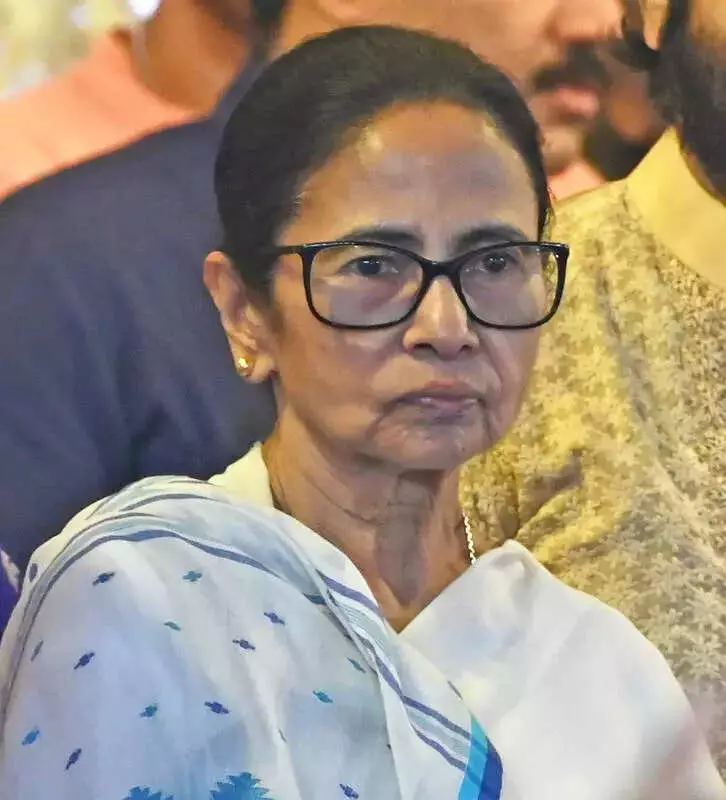
West Bengal Chief Minister Mamata Banerjee has escalated her confrontation with the Election Commission of India (ECI), firing off a strongly-worded four-page letter to Chief Election Commissioner (CEC) Gyanesh Kumar on Saturday. In her fourth such communication since the process began, she demanded the commission either rectify multiple serious "glitches" or immediately halt the ongoing Special Intensive Revision (SIR) of the state's electoral rolls, which she termed "unplanned, arbitrary and ad-hoc."
Allegations of Discrimination and Informal Diktats
In her letter, the Chief Minister pointedly questioned why Bengal was being "singled out" for what she described as "arbitrary and illegal" voter deletions. She listed a series of procedural irregularities, starting with the alleged rejection of documents that were accepted elsewhere.
Banerjee highlighted that the family register, extensively accepted as valid proof of identity during the SIR exercise in Bihar, was now being denied in Bengal. She claimed this denial was being communicated informally via WhatsApp messages from the office of the Chief Electoral Officer, without any formal notification or statutory order. "Such selective and unexplained exclusion of a previously accepted document raises serious concerns of discrimination and arbitrariness," she asserted.

Further, she alleged that district election officers had been informally told not to accept permanent residence or domicile certificates issued by various state government authorities as proof of identity. She also criticized the tendency of EC officials to issue critical instructions over WhatsApp or SMS, stating, "No proper written notifications, circulars or statutory orders, mandatory for an exercise of such magnitude and constitutional significance are being issued."
Harassment of Voters and Lack of Transparency
The TMC chief painted a picture of an opaque and harassing process for ordinary citizens. She stated that electors, including migrant workers who have moved to other states for livelihood, were being compelled to appear for hearings despite being fully eligible. This, she noted, was in total contrast to the procedure followed in Bihar and other states.
Calling the EC insensitive, Banerjee wrote, "Electors are being summoned for hearings without being informed of the specific reasons, thereby subjecting them to needless anxiety and harassment. Even elderly, infirm, and seriously ill citizens are not being spared." She added that many were forced to travel 20-25 kilometres as hearings were inexplicably centralised.
She also flagged the lack of documentation, noting that people appearing for hearings were neither informed in advance about required documents nor given any acknowledgment for submissions. "This complete lack of documentation creates uncertainty, enables arbitrariness, and opens the door to potential misuse," the CM warned.
Backend Deletions and Constitutional Concerns
One of the most serious allegations in the letter pertained to the "backend deletion of electors." Banerjee claimed there were grave allegations regarding the misuse of IT systems to delete voters without following due process and without the knowledge or approval of the statutory Electoral Registration Officers (EROs).
"This raises serious questions as to who has authorised such actions and under what legal authority. The EC must be held fully accountable for any illegal, arbitrary or biased actions carried out under its supervision or direction," she stated emphatically.
The Chief Minister concluded that the informality and arbitrariness of the process left no scope for accuracy, transparency, or accountability. She cautioned that any error could lead to serious discrepancies, including the potential disenfranchisement of genuine voters, an outcome she called "wholly unacceptable in a constitutional democracy governed by the rule of law." With this letter, the political battle over West Bengal's electoral rolls has reached a new crescendo, setting the stage for a tense exchange with the poll authority.






