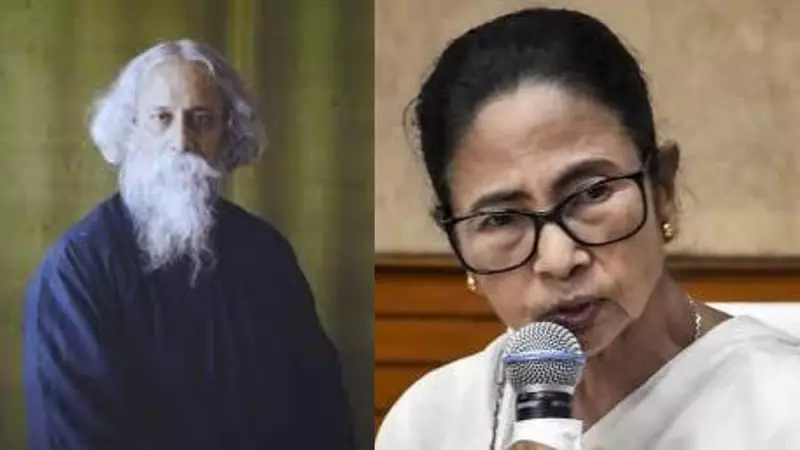
West Bengal Chief Minister Mamata Banerjee has made a striking historical-political statement, suggesting that even Nobel laureate Rabindranath Tagore would not have been spared from the Special Intensive Revision (SIR) hearing process if he were alive today. This comment comes amid ongoing political discussions about governance and historical legacy in the state.
Mamata Banerjee's Historical Analogy on SIR Proceedings
During a recent address, Mamata Banerjee drew parallels between contemporary administrative procedures and historical figures, specifically mentioning Rabindranath Tagore. She asserted that the revered poet and philosopher would have likely been summoned for SIR hearings under current circumstances, highlighting what she perceives as the extensive reach of such governmental processes.
The Fascinating Evolution of the Tagore Family Name
In her remarks, Banerjee also shed light on the lesser-known genealogical history of the Tagore family. She revealed that Rabindranath Tagore's ancestors were originally known by the surname Kushari before adopting the title Thakur, which was subsequently anglicized to the now-famous Tagore.

This name transformation reflects several important historical developments:
- The family's initial identification with the Kushari surname
- The transition to using the honorific Thakur title
- The British colonial influence that led to the anglicized version Tagore
- The eventual global recognition of the Tagore name through Rabindranath's literary and cultural contributions
Political Context and Historical References
Banerjee's comments about Tagore and SIR hearings occur within a specific political context where historical figures are often invoked in contemporary debates. Her statement serves multiple purposes:
- Drawing attention to the perceived broad application of SIR procedures
- Connecting current governance practices with historical legacy
- Highlighting Bengal's cultural heritage through the Tagore reference
- Creating a narrative about administrative continuity and change
The Chief Minister's remarks have sparked discussions among political observers and cultural commentators alike, with many analyzing the implications of comparing modern administrative mechanisms with historical icons like Tagore.
Understanding the SIR Hearing Framework
While Banerjee did not elaborate extensively on the SIR hearing specifics in her Tagore reference, her comments bring attention to this administrative process. Special Intensive Revision hearings typically involve detailed examination and verification procedures, though their exact application varies across different contexts and departments.
By suggesting that even a figure of Tagore's stature would be subject to such processes, Banerjee appears to be making a statement about the comprehensive nature of current administrative oversight mechanisms.
Cultural Significance and Political Messaging
Rabindranath Tagore remains an iconic figure in Bengali culture and Indian history, making any contemporary political reference to him particularly significant. Banerjee's comments effectively:
- Bridge historical legacy with current political discourse
- Utilize cultural symbolism to make administrative points
- Engage with Bengal's rich intellectual heritage
- Create memorable political messaging through historical analogy
The revelation about the Tagore family's original Kushari surname adds an additional layer of cultural-historical interest to Banerjee's remarks, providing context about the evolution of one of Bengal's most prominent families.
As political narratives continue to evolve in West Bengal, such intersections of history, culture, and governance remain central to public discourse, with figures like Mamata Banerjee strategically employing historical references to frame contemporary political discussions.