West Bengal Chief Minister Mamata Banerjee took to the streets of Kolkata on Wednesday, leading a massive protest march against the Enforcement Directorate (ED). The demonstration was a direct response to the central agency's recent actions, which the Trinamool Congress (TMC) supremo labeled as a politically motivated vendetta by the Bharatiya Janata Party (BJP)-led central government.
Chief Minister Hits the Streets in Defiance
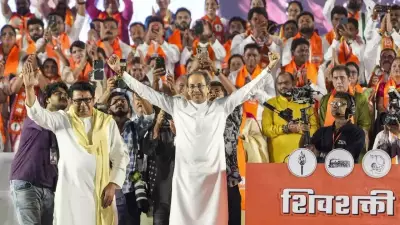
The protest march, which saw a significant turnout of TMC leaders, workers, and supporters, commenced from the party's headquarters on Harish Chatterjee Street in Bhowanipore. It culminated at the statue of B.R. Ambedkar on Red Road. Banerjee, at the forefront, walked the entire route, rallying her party and sending a strong message of defiance.
In her address during the protest, Mamata Banerjee launched a scathing attack on the BJP. She accused the party of using central agencies like the ED to target and intimidate political opponents, especially in states where the BJP is not in power. "This is not an investigation; this is political terrorism," she asserted, framing the ED's actions as an assault on the federal structure of the country.
The I-PAC Connection and Escalating Tensions
The immediate trigger for the protest was the ED's questioning of several employees of the Indian Political Action Committee (I-PAC). I-PAC is a political consultancy that has worked closely with the TMC in the past. The agency's actions are reportedly linked to an alleged money laundering case.
Banerjee vehemently defended I-PAC, stating that the organization merely provides professional electoral strategy services. She argued that targeting a private company engaged in lawful work was an overreach and a clear attempt to disrupt her party's operations ahead of future elections. This incident has significantly escalated the ongoing political war between the TMC and the BJP in West Bengal.
The protest was notably held on April 24, 2024, and it underscores the deepening rift between the state government and central authorities. Banerjee used the platform to rally her cadre, projecting herself as a leader standing up against Delhi's "bullying" tactics to protect Bengal's dignity.
Political Repercussions and a Firm Stand
The public march led by a sitting chief minister is a dramatic political gesture, highlighting the street-fighting strategy that Mamata Banerjee is known for. It serves multiple purposes: consolidating her support base, drawing national attention to the issue, and putting pressure on the opposition BJP.
Banerjee's statements during the protest were unequivocal. She warned that such actions by central agencies would only strengthen the opposition's resolve. She called for unity among all non-BJP parties to fight against what she described as the misuse of investigative agencies. This event is likely to further polarize the political landscape in West Bengal and become a key talking point in the national political discourse.
The aftermath of this protest march points to a continued phase of intense confrontation. The TMC has signaled that it will not take the ED's actions lying down and will resort to mass mobilization as a counter-strategy. This sets the stage for a protracted political and legal battle, with West Bengal remaining a crucial flashpoint in the ongoing tussle between the Centre and states ruled by opposition parties.