Maharashtra Government Announces Comprehensive Water Security Strategy
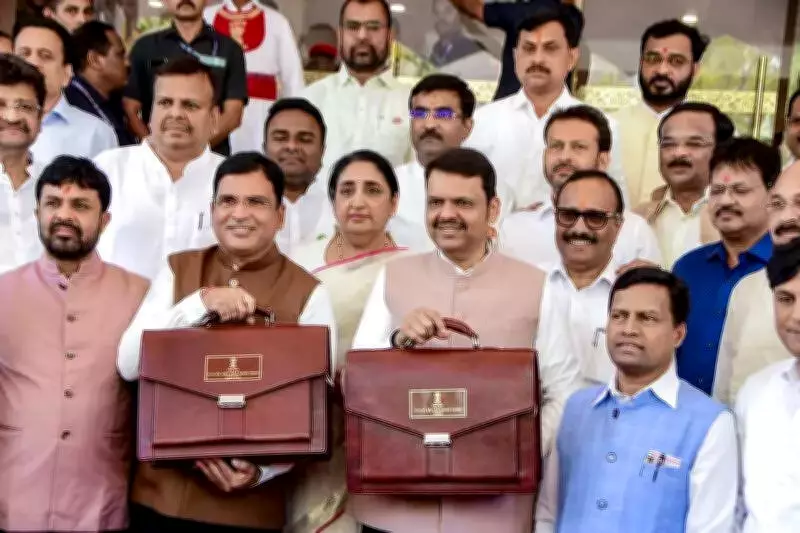
In response to meteorological forecasts predicting a potentially weak monsoon season in 2026 due to emerging El Niño conditions, the Maharashtra government has unveiled an extensive, multi-faceted plan to strengthen water security across the state. The comprehensive strategy was presented by Chief Minister and Finance Minister Devendra Fadnavis during the state budget presentation in the legislative assembly on Friday.
Enhanced Water Conservation and Management Initiatives
The government plans to intensify water conservation efforts through the existing Jalyukt Shivar Abhiyan program, while simultaneously implementing advanced water storage planning and fodder development measures to mitigate potential drought conditions. A significant urban-focused initiative announced is the Rs 5,860 crore Maharashtra Urban Water Supply, Sewage Management and Reuse Project, which will be implemented with substantial support from the World Bank.
This ambitious urban water project aims to achieve 100% treatment and effective reuse of urban sewage while simultaneously strengthening the financial capacity of urban local bodies throughout Maharashtra. The initiative represents a major step toward sustainable urban water management in one of India's most populous states.
Massive Afforestation Campaign and Environmental Protection
Fadnavis reiterated the state's commitment to expanding green cover in alignment with the National Forest Policy of 1988, which recommends that at least 33% of geographical area should be under forest and tree cover. To progress toward this critical environmental goal, the government has announced plans for a massive campaign to plant 300 crore trees across Maharashtra.
This unprecedented afforestation effort will link environmental protection directly with climate action and rural employment generation, creating sustainable livelihoods while enhancing the state's ecological resilience. The initiative recognizes the interconnected nature of forest cover, water retention, and climate stability.
Major River-Linking Infrastructure Projects
The budget highlighted several substantial river-linking projects designed to address regional water imbalances. These include the Rs 94,968 crore Wainganga–Nalganga River Link Project and the Rs 13,497 crore Damanganga–Vaitarna–Godavari River Link Project, both aimed at transferring surplus water to drought-prone regions of the state.
Additionally, the Rs 2,240 crore Maharashtra State Responsive Development Programme will focus specifically on flood mitigation in Kolhapur and Sangli districts. This program includes innovative approaches to divert floodwaters from the Krishna basin to water-scarce areas of western Maharashtra and Marathwada region.
Advanced Water Information Systems
Minister of State for Finance Ashish Jaiswal announced that a Rs 71.2 crore State Water Information Centre will be established in Nashik to provide certified digital data on water resources throughout Maharashtra. This technological infrastructure will enable evidence-based decision-making for water management and allocation across the state.
Long-Term Vision for Water Security
Government officials emphasized that the combined measures are designed to secure water availability for both rural and urban regions up to 2047 while substantially strengthening Maharashtra's overall climate resilience. The comprehensive approach addresses multiple dimensions of water security:
- Conservation through traditional and modern techniques
- Infrastructure development for water storage and distribution
- Environmental protection through massive afforestation
- Technological systems for water data management
- Climate adaptation strategies for flood and drought management
The timing of these announcements is particularly significant given the meteorological forecasts suggesting that El Niño conditions could lead to reduced monsoon rainfall in 2026, potentially creating water stress across Maharashtra. By proactively addressing these challenges through integrated planning and substantial financial investment, the state government aims to build a more water-secure future for all residents.