High-Octane Campaign for Maharashtra's Municipal Polls Concludes
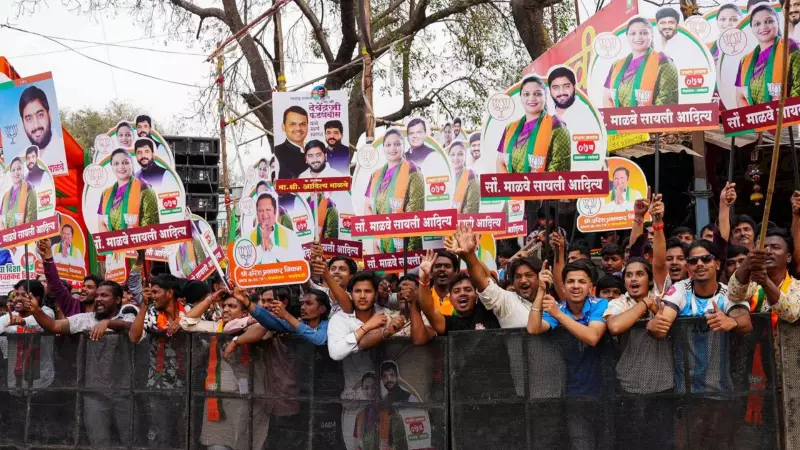
The intense campaign period for elections to twenty-nine municipal corporations in Maharashtra reached its conclusion on Tuesday. All political parties made their final appeals to voters across the state. The battle for control of these local bodies, especially the crucial Brihanmumbai Municipal Corporation (BMC), has dominated the political landscape.
Key Contests and Major Alliances
The election features a complex political fight. The ruling Mahayuti alliance, comprising the BJP, Deputy Chief Minister Eknath Shinde's Shiv Sena, and Deputy Chief Minister Ajit Pawar's NCP, is contesting across the state. They face a challenge from the opposition.
In a significant development, Uddhav Thackeray has allied with his cousin, Maharashtra Navnirman Sena (MNS) chief Raj Thackeray, after nearly two decades apart. This alliance aims to consolidate Marathi votes. Meanwhile, the Congress party has chosen to contest in Mumbai alongside the Vanchit Bahujan Aghadi (VBA), rather than with its usual Maha Vikas Aghadi (MVA) partners.

This BMC election marks the first for the Shiv Sena since its dramatic split in 2022, which saw Eknath Shinde walk away with most legislators, the party name, and its symbol.
Polling Details and Voter Turnout
Voting for a total of 2,869 seats spread across these twenty-nine corporations is scheduled for January 15. A massive electorate of 3.48 crore eligible voters will decide the fate of 15,931 candidates. The counting of votes will follow swiftly on January 16.
These elections are being held after a delay of over six years, as the tenures of these corporations ended between 2020 and 2023. Nine of these corporations are located within the Mumbai Metropolitan Region (MMR), a highly urbanized belt.
Campaign Trail Highlights
Chief Minister Devendra Fadnavis spearheaded the campaign for the ruling Mahayuti alliance, canvassing extensively for its candidates. Deputy CM Eknath Shinde held a vigorous schedule, addressing 29 campaign rallies and conducting 25 road shows across 51 locations.
The NCP, under Ajit Pawar, concentrated its efforts on its traditional strongholds of Pune and Pimpri-Chinchwad. Here, it faces its rival faction, the Sharad Pawar-led NCP(SP), which has joined forces with other parties to challenge the BJP.
The campaign also saw star power from beyond Maharashtra's borders. Notable campaigners included Telangana Congress Minister Mohammad Azharuddin, Congress Rajya Sabha MP Imran Pratapgarhi, AIMIM chief Asaduddin Owaisi, and Tamil Nadu BJP leader K. Annamalai.
Promises and Political Discourse
Populist promises aimed at women voters featured prominently in party manifestos. The Mahayuti alliance pledged a fifty percent concession for women traveling on BEST buses in Mumbai. The Thackeray cousins' alliance promised a monthly allowance of Rs 1,500 for women domestic helps and a complete property tax waiver for houses up to 700 square feet.
The Congress manifesto focused on environmental and civic issues for Mumbai, vowing to tackle pollution, improve the BEST bus fleet, and strengthen the city's financial health.
The discourse around who would become Mumbai's next mayor grew heated. The BJP alleged that a Shiv Sena (UBT) victory would lead to a Muslim mayor. Uddhav Thackeray's party countered this by assuring a Marathi mayor. Chief Minister Devendra Fadnavis himself guaranteed that the mayor would be both "Hindu and Marathi."
The list of municipal corporations going to polls is extensive. It includes major cities like Mumbai, Pune, Nagpur, Nashik, Thane, Navi Mumbai, Kalyan-Dombivli, and Chhatrapati Sambhajinagar, among others such as Solapur, Amravati, and Kolhapur.