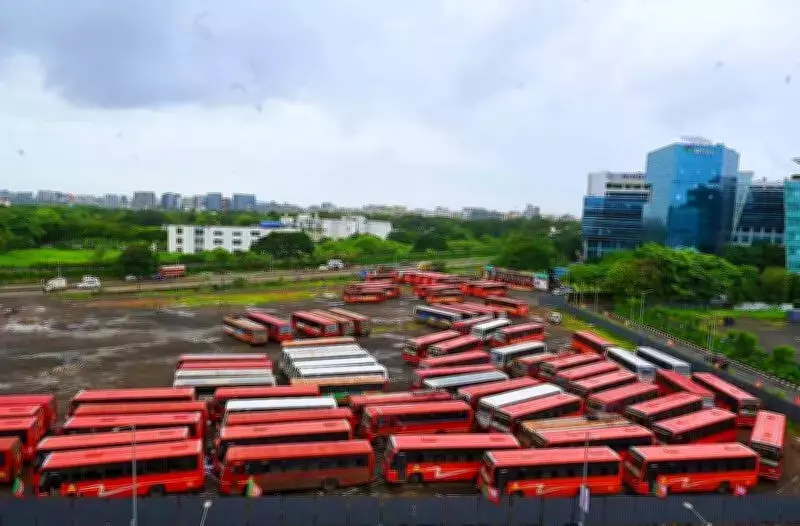
The Maharashtra State Road Transport Corporation (MSRTC) is set for a major fleet expansion, with the state government approving the procurement of 8,300 buses this year. This move aims to tackle an acute shortage that has disrupted services across numerous routes, impacting over 50 lakh daily commuters throughout Maharashtra.
Financial Strain and Fleet Decline
An official from the bus corporation revealed that MSRTC has been grappling with sustained financial stress, currently incurring daily losses of Rs 1 to 1.5 crore. The fleet and ridership have not rebounded to pre-pandemic levels. Prior to Covid-19, MSRTC operated approximately 18,000 to 19,000 buses, serving nearly 66 lakh passengers daily. However, procurement slowed over the past four to five years due to the pandemic and prolonged employee strikes, leading to a fleet reduction to about 12,600 buses by the end of 2024. This decline has left many routes with insufficient trips, exacerbating commuter woes.
Long-Term Expansion Strategy
Under a long-term policy, MSRTC plans to purchase 20,000 to 25,000 buses over the next few years. The government has granted in-principle approval, with the first phase involving 8,300 buses slated for induction this year. This phased approach is designed to systematically rebuild the fleet and enhance service reliability.

Details of the First Phase Procurement
The initial phase includes a diverse mix of buses to cater to various needs:
- 3,000 high-capacity buses: Featuring a 3x2 seating layout with 55 seats, these buses, named after Rajmata Jijau Saheb, will be deployed in phases starting from March on heavily crowded intercity routes.
- 5,000 regular buses: The tender process for these buses is in its final stages, aiming to bolster standard services across the state.
- 100 midi buses: Intended to extend connectivity to remote and tribal areas, improving access for underserved communities.
- 200 ultra-modern buses: Designed to compete with private operators, offering enhanced amenities and comfort.
Following this induction, MSRTC targets increasing daily ridership to 70 to 75 lakh passengers in the future.
Impact of Fare Concessions and Current Demand
Passenger numbers saw a significant uptick last year after the government introduced a 50% fare concession for women and free travel for senior citizens above 75 years. Currently, the bus corporation carries about 50 lakh passengers daily, but officials acknowledge that demand continues to outstrip supply on several key corridors, highlighting the urgent need for fleet expansion.
Ministerial Insights and Financial Outlook
When contacted, State Transport Minister Pratap Sarnaik emphasized the correlation between fleet size and revenue. "If buses increase, passengers will increase, and if passengers increase, revenue will automatically grow," he stated. He added that higher capacity would translate into stronger earnings and improved service reliability, essential for the corporation's sustainability.
MSRTC's daily expenditure is estimated at Rs 35 crore, while revenue stands at around Rs 33 crore, contributing to the ongoing losses. Sarnaik noted that MSRTC serves as a public lifeline rather than a profit-driven enterprise, but stressed the importance of balancing costs and income to minimize financial deficits.
Operational Enhancements and Future Goals
A senior official highlighted that initiatives like overnight rural bus services, better access to tribal hamlets, and additional buses on crowded routes are expected to strengthen operations. "These measures will help curtail losses for the corporation by year-end," the official added, underscoring the strategic focus on both service improvement and financial recovery.