Maharashtra Civic Polls Deliver Clear Mandate for BJP-Led Alliance
The 2026 Maharashtra civic elections have concluded with a powerful message from urban voters. Across twenty-seven municipal bodies and nearly three thousand wards, the BJP-led Mahayuti alliance emerged as the dominant force. This comprehensive victory includes the crucial Brihanmumbai Municipal Corporation polls, where the alliance secured a comfortable majority.
Fadnavis and the Triple Engine Effect
Devendra Fadnavis's strategic leadership proved instrumental in the BJP's sweeping success. The party is set to capture approximately ninety wards in the BMC alone, marking a significant improvement from their eighty-two seats in 2017. When combined with alliance partners, the Mahayuti tally comfortably exceeds the majority threshold of one hundred fourteen seats, currently projected at over one hundred forty wards.
The BJP also established commanding leads in other major urban centers:

- Pune Municipal Corporation: Fifty-two out of one hundred sixty-two seats
- Nagpur Municipal Corporation: Eighty-five out of one hundred fifty-one seats
- Navi Mumbai Municipal Corporation: Forty-two out of sixty-seven seats
- Thane Municipal Corporation: Thirty-eight out of one hundred thirty-one seats
This outcome strongly validates the "triple engine" narrative promoted by the BJP under Prime Minister Narendra Modi's leadership. Political analysts point to one overriding factor behind this success: a deeply fragmented opposition that failed to present a united front.
Opposition Fragmentation and Friendly Fights
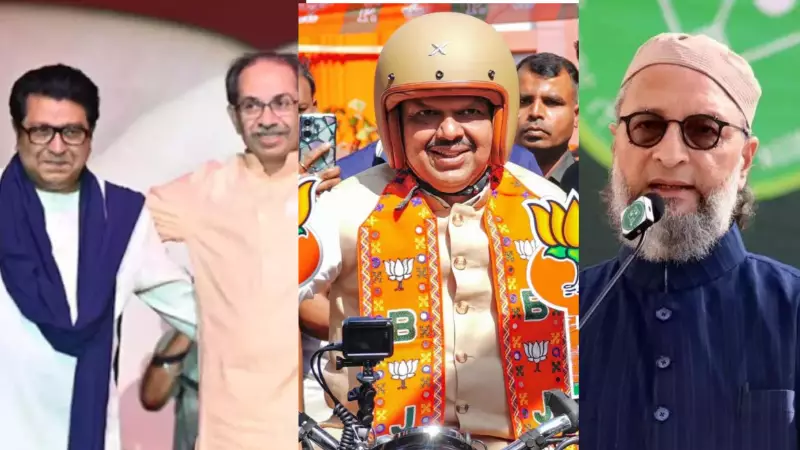
The sharpest divisions appeared in the traditional Marathi heartland. Although the Shiv Sena (UBT) and Maharashtra Navnirman Sena attempted a tactical understanding, they faced competition from both the BJP and the Eknath Shinde-led Shiv Sena faction. In more than eighty wards, the two Sena groups engaged in direct contests, effectively splitting their traditional voter base.
The Congress party's decision to contest independently compounded these problems. By attempting to consolidate minority and Dalit voters separately, the party triggered a three-way split in what observers describe as the secular vote. In several areas, Congress candidates, along with those from the Vanchit Bahujan Aghadi and Samajwadi Party, played spoiler roles that ultimately hurt the Shiv Sena (UBT) more than the Mahayuti alliance.
This splintering meant anti-Mahayuti sentiment never coalesced into a decisive voting bloc. Reports indicated at least fifteen instances of "friendly fights" where opposition parties fielded candidates against one another. These internal rivalries confused voters and drained organizational resources, leaving the opposition poorly positioned to mount a unified challenge.
Thackeray Legacy Faces Steep Decline
The election results signal a decisive realignment in Mumbai's civic politics. The BJP, which historically played second fiddle during the undivided Shiv Sena's long reign over the BMC, has now emerged as the dominant force. This shift received crucial support from the Eknath Shinde-led Sena faction that broke away in 2022.
For the Uddhav Thackeray-led Shiv Sena (UBT), this outcome represents their weakest showing in the corporation in over two decades. While the broader "Thackeray brand" retained some resonance with voters, it proved insufficient to arrest the party's declining urban influence. The results also raise questions about the political viability of Raj Thackeray's MNS, whose appeal failed to translate into significant electoral gains.
Historically, the Shiv Sena first captured the BMC in 1997 with one hundred three seats, unseating the Congress party which secured forty-nine. The BJP won twenty-six seats that year, while the Samajwadi Party took twenty-one wards. In the 2017 polls, the undivided Sena remained the single largest party with eighty-four seats, narrowly ahead of the BJP's eighty-two.

The current elections saw the Shiv Sena (UBT) and MNS contest together in an effort to consolidate the Marathi vote amid a fractured Sena legacy. That strategy failed to protect Uddhav Thackeray's traditional civic bastion. Political observers note this verdict reflects a fundamental shift in Mumbai's power structure, with influence moving away from the Thackeray-led Sena as the BJP significantly expands its footprint in India's financial capital.
Pawar's Reunion Strategy Falls Flat
Ajit Pawar's attempt to revive the Nationalist Congress Party's urban strongholds through a late "family reunion" with Sharad Pawar's faction produced disappointing results. The BJP swept both Pune and Pimpri-Chinchwad despite Pawar's unusually confrontational campaign against his own state-level allies.
Live trends showed the BJP leading decisively in both cities: over one hundred ten seats in Pune compared to the NCP's twelve and NCP (SP)'s two, and eighty-four seats in Pimpri-Chinchwad against the NCP's thirty-seven. This outcome significantly weakens Ajit Pawar's bargaining position within the Mahayuti alliance.
Compounding the setback, Sharad Pawar remained largely absent from the campaign, as did Baramati MP Supriya Sule, blunting the optics of reconciliation. Ajit Pawar's manifesto promises, including free Metro and bus rides along with property tax relief for small homes, were dismissed by BJP leaders as unrealistic.
The elections, held after an eight-year gap, also occurred amid scrutiny of the Mundhwa land deal involving Ajit Pawar's son, Parth Pawar. Together, these results underscore the limits of factional reunions without organizational unity or voter trust.
AIMIM Makes Strategic Inroads
One notable surprise emerged from the All India Majlis-e-Ittehadul Muslimeen's performance. AIMIM has won or is leading in over ninety seats, outperforming regional parties like Raj Thackeray's MNS and Sharad Pawar's NCP.
While AIMIM's overall tally remains modest compared to the Mahayuti or traditional Congress vote banks, the party's strategic gains have reshaped local arithmetic in several wards. In tightly contested seats, their presence appears to have split opposition votes, inadvertently aiding Mahayuti victories.
Congress Finds Limited Silver Linings
For the Indian National Congress, the civic polls delivered mostly disappointing results with some redeeming elements. The party decided to contest independently after the Thackeray cousins reunited. While finishing fourth in the BMC with twenty-three seats, the party managed to secure third position overall in the state with over three hundred seats.
Congress performed better statewide than its Maha Vikas Aghadi allies Shiv Sena (UBT) and NCP (SP). While this limited resurgence might not represent a major turnaround, it could provide motivation for the upcoming state elections.
The 2026 Maharashtra civic elections have fundamentally reshaped the state's political landscape. Urban voters have delivered a clear mandate favoring the BJP-led alliance while exposing deep fractures within opposition ranks. These results will likely influence political strategies as parties prepare for future electoral battles across Maharashtra.