Madiga Community Escalates Protests Over Internal Reservation in Karnataka
The Madiga community in Karnataka has reignited its demand for internal reservation, creating a significant political challenge for the ruling Congress party. This development comes after the government initiated the process to fill 56,432 posts under the existing 15% Scheduled Caste quota without implementing the promised internal reservation framework.
Protests and Political Pressure Mount
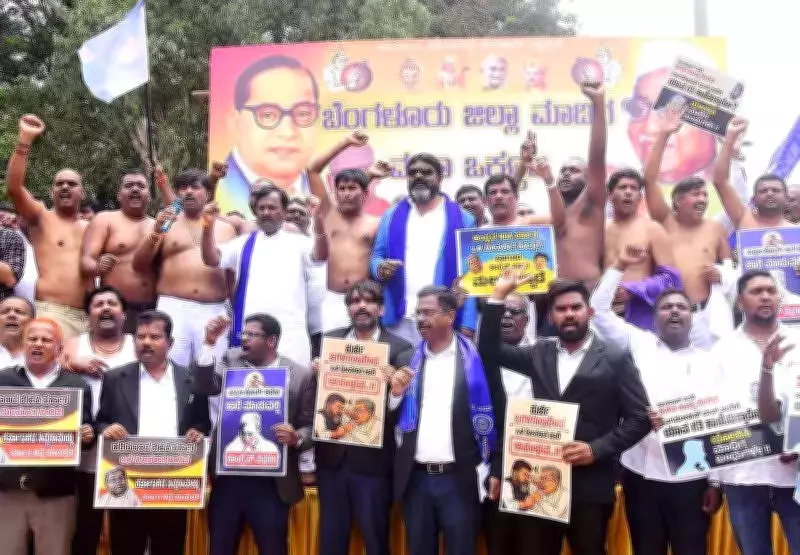
With Left sect Scheduled Castes calling for a day-and-night protest starting March 12, pressure is intensifying on the Siddaramaiah-led government to clarify its position. Community representatives warn that failure to address this longstanding demand could lead to serious political consequences, particularly ahead of crucial byelections in Bagalkot and Davanagere North assembly constituencies.
Ambanna Arolikar of the Madiga Dandora Samiti stated that his organization has decided to actively oppose Congress in the upcoming bypolls. "Congress appears to be dilly-dallying with our right to internal reservation," he asserted. "We have waited for 35 years for successive governments to grant us what is rightfully ours. Our community is determined to teach this government a lesson through electoral means."
Electoral Implications and Community Strength
Scheduled Caste representatives acknowledge that while the Madiga community may not be a decisive electoral force in every constituency, their protest aims to send a powerful message ahead of more significant zilla and taluk panchayat elections. "Madigas and Left sect communities command between 5,000 to 10,000 votes in every assembly constituency," Arolikar emphasized.
Karnataka is home to an estimated 34 lakh Madigas and members of Left sects, with approximately 20 lakh individuals constituting the voting population. This substantial demographic makes their political mobilization particularly significant for all parties contesting in the state.
BJP Seizes Political Opportunity
Sensing a political opening, the Bharatiya Janata Party has intensified its criticism of the Congress government. BJP MLC and opposition chief whip in the legislative council, N Ravi Kumar, accused the government of reneging on its commitments. "The decision to backtrack on internal reservation while simultaneously calling for applications for government jobs constitutes nothing less than cheating Scheduled Caste communities," he declared.
Kumar further warned, "Combined with general quota aspirants' unrest over delays in filling vacancies, we are prepared to launch widespread awareness campaigns against this inactive and indecisive government."
Congress Response and Cabinet Meeting
Despite the mounting pressure, Congress functionaries remain confident that the issue will be resolved during Thursday's cabinet meeting. Ramesh Babu, Congress spokesperson and MLC, stated, "Our government remains fully committed to providing internal reservation. There is nothing unusual about certain sections lobbying vigorously for their rights. While some confusion has emerged regarding this matter, concerted efforts are underway to reverse any negative impact."
Vijayanand Kashappanavar, Hungund MLA, downplayed the electoral threat, expressing doubt about major repercussions in Bagalkot. However, he acknowledged that reservation demands require delicate handling. "Even we, Panchamasali Lingayats, have been fighting for 2A reservation but recognize the need for patience. Reservation implementation is never an overnight process, and people must understand that waiting is sometimes necessary," he explained.
Broader Context and Historical Perspective
The internal reservation debate within Karnataka's Scheduled Caste communities has deep historical roots, with the Madiga community advocating for sub-categorization for over three decades. This demand stems from concerns about equitable distribution of reservation benefits among various SC subgroups.
The current political confrontation occurs against the backdrop of:
- Ongoing government recruitment processes
- Impending local body elections
- Broader reservation debates across communities
- Increasing political polarization in the state
As the Siddaramaiah government navigates this complex issue, it must balance competing political pressures while addressing legitimate community concerns. The outcome of Thursday's cabinet meeting and subsequent government actions will likely determine whether this protest escalates into a full-blown political crisis for the ruling party.