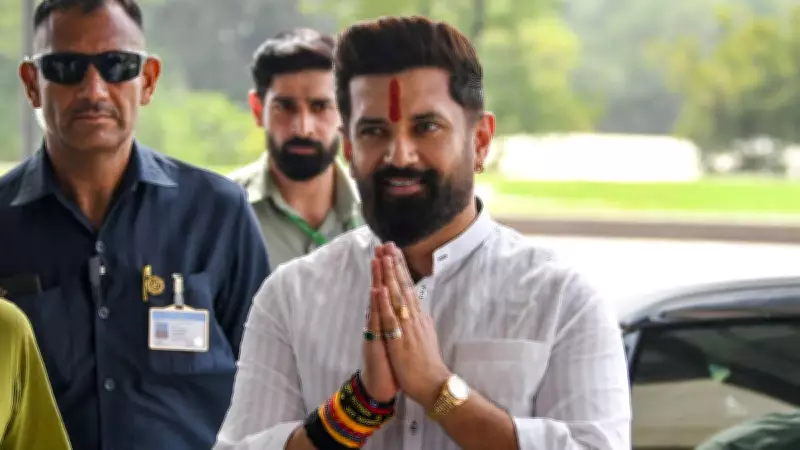
Chirag Paswan's Lok Janshakti Party (Ram Vilas) has intensified its organisational expansion in Uttar Pradesh, signalling a serious bid to contest the 2027 assembly elections. The party is focusing on building a robust grassroots network across the state, particularly in regions with significant Dalit and extremely backward class (EBC) populations.
Strategic Expansion in Key Regions
According to party insiders, the LJP (RV) has appointed district-level coordinators in over 40 districts and is conducting membership drives. The party aims to establish a presence in all 403 assembly constituencies ahead of the polls. "We are focusing on booth-level organisation to ensure a strong connect with voters," said a senior party functionary on condition of anonymity.
The expansion is concentrated in Purvanchal, Bundelkhand, and western Uttar Pradesh, where the party sees potential to attract voters disillusioned with the ruling Bharatiya Janata Party and the Samajwadi Party. The LJP (RV) is also reaching out to non-Yadav OBCs and Dalits, a strategy that helped the party gain foothold in Bihar.

Chirag Paswan's Vision for UP
Chirag Paswan, who leads the party after the split from his uncle Pashupati Kumar Paras, has been vocal about his ambition to make the LJP a national force. "Uttar Pradesh is crucial for our national ambitions. We will contest all seats and give a strong alternative to the people," Paswan said during a recent rally in Varanasi.
The party's core vote bank in Bihar—Dalits, especially from the Paswan community—is being leveraged to mobilise similar communities in UP. The LJP (RV) is also forging alliances with smaller caste-based parties to consolidate the non-Yadav OBC and Dalit vote, which constitutes over 40% of the state's electorate.
Challenges and Political Landscape
However, the LJP faces stiff competition from established players. The BJP, with its formidable organisational machinery, and the SP, led by Akhilesh Yadav, have deep roots in UP. The Bahujan Samaj Party, traditionally the voice of Dalits, remains a significant force despite its decline. Political analyst Dr. Ramesh Dixit noted, "The LJP's success will depend on its ability to translate caste arithmetic into electoral gains. It is a challenging task given the crowded political space."
The party is also grappling with internal factionalism, as some leaders in Uttar Pradesh have expressed reservations about Chirag Paswan's leadership. To address this, the party has launched a membership drive and training programmes for local workers, aiming to build a committed cadre.
Looking Ahead to 2027
With the 2027 assembly elections over two years away, the LJP (RV) is playing a long game. The party plans to contest local body elections to strengthen its base. "We are in it for the long haul. Our organisation will be ready by 2027," said a party spokesperson.
If the LJP succeeds in Uttar Pradesh, it could reshape the state's political dynamics, especially in the context of the 2029 Lok Sabha elections. For now, the party is focused on building from the ground up, hoping to capitalise on any anti-incumbency sentiment against the ruling parties.