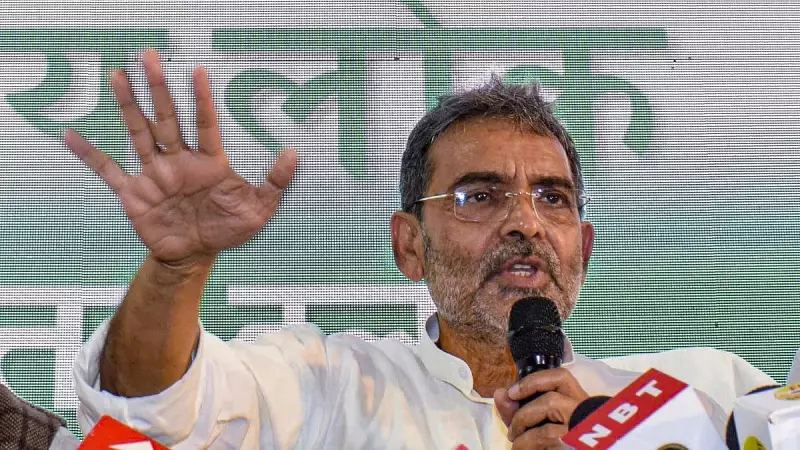
RLSP president Upendra Kushwaha finds himself at the center of a political storm after deciding to include his son, Kumar Sarvjeet, in the Bihar cabinet while overlooking elected party MLAs. The controversial move has sparked significant backlash within his own party and drawn sharp criticism from political opponents.
The Controversial Cabinet Decision
Upendra Kushwaha, the Rashtriya Lok Samta Party (RLSP) chief and newly appointed cabinet minister, has triggered internal dissent by choosing his son for a ministerial position over other qualified party legislators. The decision comes as part of the recent cabinet expansion in Bihar under Chief Minister Nitish Kumar's government.
The RLSP, which secured two seats in the recent assembly elections, saw both its MLAs - Sudhanshu Shekhar from Chenari and Lalan Paswan from Dinara - being sidelined in favor of Kushwaha's son. This move has created substantial unrest within the party ranks, with many questioning the democratic principles behind such a decision.
Kushwaha's Defense and Political Calculations
Facing mounting criticism, Upendra Kushwaha has defended his decision by arguing that it represents a strategic political move rather than simple nepotism. The former Union minister emphasized that his son's inclusion was carefully considered and aimed at strengthening the party's long-term prospects in Bihar politics.
Kushwaha pointed to his extensive political experience and understanding of ground realities as justification for the controversial choice. He maintained that the decision was made in the best interests of the party and its future growth, though this explanation has done little to quell the discontent among party members and political observers.
Political Reactions and Implications
The opposition has been quick to capitalize on the situation, with several political leaders accusing Kushwaha of promoting dynasty politics. Critics argue that the move undermines democratic values and sets a dangerous precedent in Bihar's political landscape.
Within the RLSP, the decision has created visible divisions. Party workers and supporters have expressed disappointment, questioning whether family connections should outweigh the merit and electoral success of established party MLAs. The controversy comes at a crucial time when the party is trying to consolidate its position in Bihar's competitive political environment.
Political analysts suggest that this decision could have long-term consequences for Kushwaha's leadership and the RLSP's credibility among voters. The incident also raises broader questions about political dynasty and meritocracy in Indian politics, particularly in states like Bihar where caste and family connections often play significant roles in political appointments.
As the controversy continues to unfold, all eyes remain on how Kushwaha will manage the internal dissent and whether this decision will ultimately strengthen or weaken his party's position in Bihar's complex political chessboard.