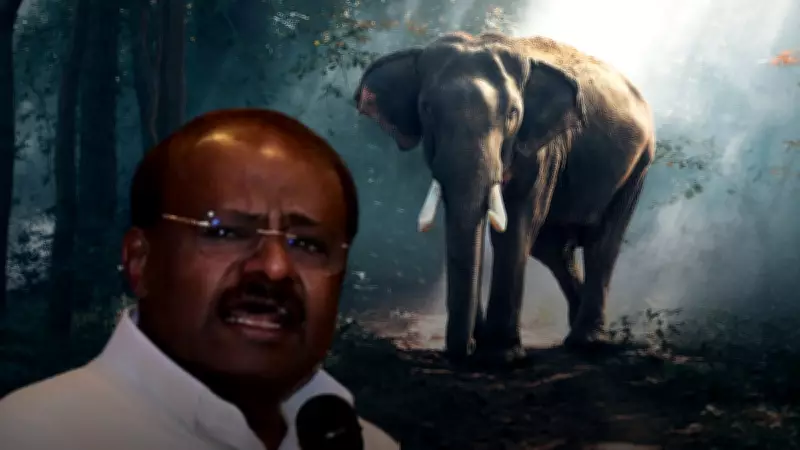
Union Minister H D Kumaraswamy Pledges Action on Wild Elephant Menace
Union Minister H D Kumaraswamy has declared a firm commitment to addressing the escalating wild elephant menace in Karnataka, emphasizing that the issue has been overlooked by previous administrations. Speaking in Hassan on February 27, 2026, Kumaraswamy outlined plans to intensify efforts to mitigate conflicts between humans and elephants, which have become a growing concern in the region.
Criticism of Past Neglect
In his statement, Kumaraswamy pointedly criticized those who came to power after him, accusing them of failing to pay adequate attention to the wild jumbo issue. "Those who came to power after this did not paid much attention to the wild jumbo issue," he said, highlighting a perceived lack of proactive measures in recent years. This remark underscores the political dimension of wildlife management in Karnataka, where elephant-human conflicts have led to property damage, crop losses, and safety risks for local communities.
Focus on Karnataka's Elephant Problem
The wild elephant menace in Karnataka, particularly in areas like Hassan, has been a persistent challenge due to habitat fragmentation and increasing human encroachment into forested regions. Kumaraswamy's announcement signals a renewed focus on this critical environmental and social issue. Key aspects of the proposed efforts include:

- Enhanced Monitoring: Implementing advanced tracking systems to monitor elephant movements and prevent conflicts.
- Community Engagement: Working closely with local residents to develop sustainable coexistence strategies.
- Infrastructure Improvements: Building barriers and creating safe corridors to reduce elephant incursions into human settlements.
- Policy Reforms: Reviewing and updating wildlife protection policies to address current challenges effectively.
These initiatives aim to balance conservation goals with the safety and livelihoods of people living in elephant-prone areas.
Broader Implications for Wildlife Management
Kumaraswamy's pledge comes at a time when human-wildlife conflicts are on the rise across India, driven by factors such as deforestation and climate change. By prioritizing the wild elephant issue, the Union Minister aims to set a precedent for more robust wildlife management practices nationwide. Experts suggest that a multi-faceted approach, combining technology, community involvement, and policy enforcement, is essential for long-term solutions.
The statement has garnered attention from environmental groups and local stakeholders, who hope that this renewed focus will translate into tangible actions on the ground. As Karnataka grapples with this complex issue, Kumaraswamy's commitment represents a significant step toward fostering harmony between humans and elephants in the region.