Kolkata Auto Crisis Deepens as Fuel Woes Outlast LPG Cap Removal
In a significant development for Kolkata's transport sector, oil marketing companies (OMCs) have officially withdrawn the 10-litre cap on auto LPG refuelling across the city. This restriction was initially implemented to manage severe supply shortages, but officials confirm that supply conditions have now stabilized in most urban areas. "There is currently no restriction on refuelling autos at LPG dispensing stations," stated an OMC representative, highlighting the improved fuel availability.
Persistent Commuter Hardships Amid Rising Operational Costs
Despite this regulatory relief, Kolkata's commuters are facing escalating challenges. A fresh hike in auto fuel prices has triggered a noticeable reduction in the number of autos operating during non-peak hours. Even during the crucial office rush periods, availability has tightened considerably as drivers implement new strategies to counterbalance their rising operational expenses.
Auto union representatives reveal that most drivers are now refusing to run unless they can secure at least 50%-60% occupancy on their return trips. This cautious approach has directly resulted in reduced auto frequency, particularly during off-peak hours, and has created longer queues at major auto stands throughout the city.

Economic Realities Force Operational Changes
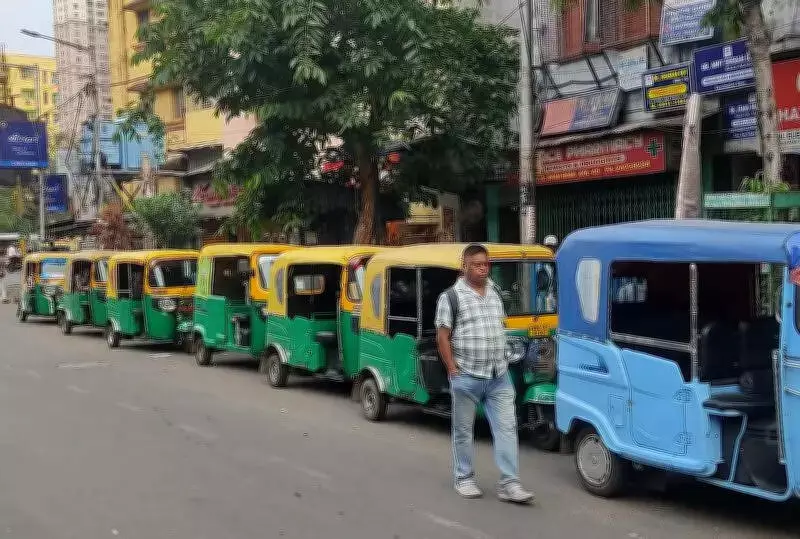
At key transportation hubs such as Chowrasta and Garia, autos have been observed queuing in larger numbers, with operators even requesting additional parking space from local traffic authorities. Drivers emphasize that the economics of running autos have become increasingly unsustainable.
"We earn approximately Rs 96 on a trip from Chowrasta to Tollygunge, but we require nearly Rs 60 worth of gas for the return journey to make it financially viable," explained Swapan Dutta, an experienced auto operator. "If we fail to secure enough passengers for both directions, we inevitably incur losses."
Although fuel availability has improved overall, inconsistencies persist at the pump level. Drivers report spending hours and consuming additional fuel merely to locate functioning refuelling stations. "Sometimes it consumes 2-6 kg of gas just to reach a pump where LPG is available, especially for those commuting from the outskirts," shared another frustrated driver.
Widespread Commuter Inconvenience Across Kolkata
Commuters across Kolkata are reporting growing inconvenience and extended waiting times. "I waited over 40 minutes at Tollygunge Metro station to secure an auto to Sakherbazar," recounted Sutirtha Banerjee, a resident of Silpara. "Although autos were present at the stand, many drivers informed me they had completely run out of gas."
Similar distressing scenes have emerged in north Kolkata. "At Sovabazar, I waited nearly 15 minutes for an auto to Ultadanga, and even bus services were remarkably scarce," said Amit Saha, a daily commuter. "This level of disruption was never such a pervasive problem in previous years."
Fare Hikes Implemented Across Multiple Routes
Amid this ongoing disruption, several auto routes have introduced fare increases to offset operational costs:
- The Chakraberia-Lake Gardens route has implemented a Rs 2 increase per trip
- Jadavpur-Rabindra Sarobar and Lake Gardens-Rabindra Sarobar routes are now charging Rs 1-2 extra
- In Dum Dum, at least two prominent routes have raised fares by a similar margin
Expert Analysis and Future Outlook
Transportation experts acknowledge that lifting the LPG cap was a necessary administrative step, but emphasize that stabilizing fuel prices and ensuring consistent availability will be crucial for restoring normal auto services in Kolkata. The current situation underscores the complex interplay between fuel economics, driver livelihoods, and commuter convenience in urban transportation systems.