Kolhapur's Mayor Musical Chairs: A History of Political Instability
As political parties intensify their scramble to seize control of the Kolhapur mayor's chair, historical records reveal just how turbulent the city's civic throne has been. The Kolhapur Municipal Corporation (KMC) has experienced remarkable political volatility, with leadership changing hands at an astonishing rate over decades.
Forty-Nine Mayors in Four Decades
In the 43-year period between 1978 and 2020, Kolhapur Municipal Corporation witnessed an incredible 49 different mayors occupying the city's highest civic office. Many of these leaders barely had time to settle into their positions before being unseated, creating a pattern of constant political upheaval that has defined the city's governance.
The statistics are particularly striking when examining short tenures. Ten of Kolhapur's mayors didn't even complete six months in office, underscoring just how fragile and fiery the local political landscape has remained throughout modern municipal history.

The Evolution of Kolhapur's Municipal Governance
Kolhapur attained municipal corporation status in December 1972, marking a significant milestone in the city's administrative development. Following this elevation, the city remained under administrative rule for the first five years before transitioning to elected leadership.
The first elected body assumed charge in August 1978, with Narayan Jadhav—popularly known as Babasaheb Kasbekar—serving as Kolhapur's inaugural mayor from August 16, 1978, to August 20, 1979. This established the precedent for what would become a remarkably unstable mayoral tradition.
Changing Tenure Patterns Through the Decades
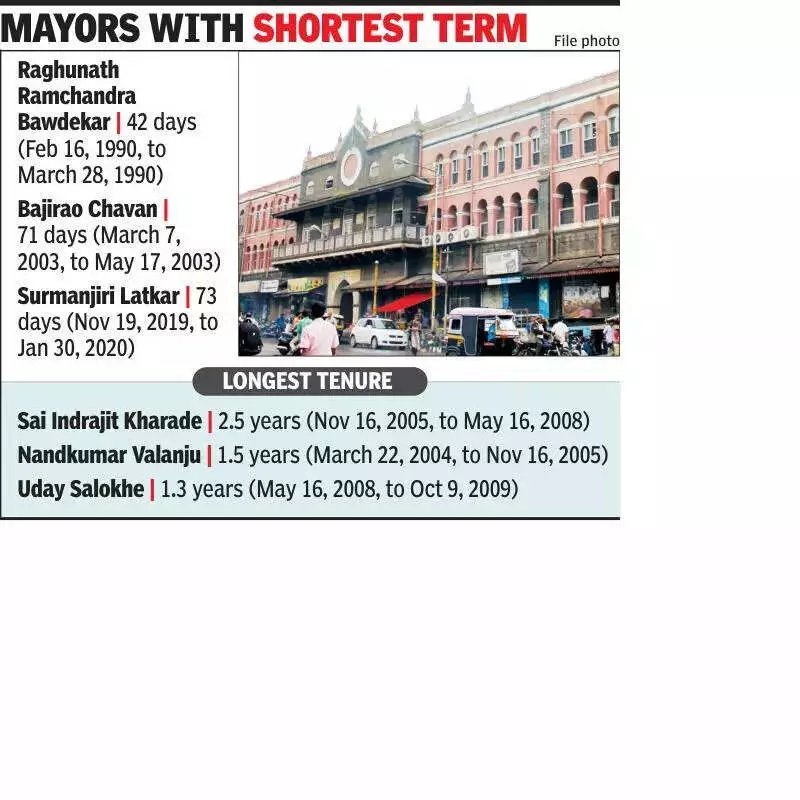
From 1978 to 2001, each mayor served a standard one-year term, though even within this framework, instability persisted. The year 1990 witnessed one of the shortest mayoral tenures when Raghunath Ramchandra Bawdekar served only 42 days as mayor. This followed the resignation of his predecessor, Ramchandra Falke, who stepped down three months early amid controversy surrounding KMC water bills.
After 2001, the mayor's tenure underwent further fragmentation, splitting into six-month terms that exacerbated the existing instability. Between 2010 and 2020 alone, 14 different corporators were appointed mayor, creating an environment of constant leadership transition.
Record Short Tenures and Their Consequences
The period between 2010 and 2020 produced some of the shortest mayoral tenures in Kolhapur's history. Surmanjiri Latkar held the record for the briefest tenure with just 73 days in office during 2019, while Madhavi Gavandi served for 129 days during the same turbulent period.
Former mayor R K Powar offered insightful commentary on this pattern, stating, "A 5-6 month mayor serves little practical purpose. The first two months are typically spent attending congratulatory meetings and ceremonial functions, followed by two months of attempting to understand the complex role. By the time a mayor begins to genuinely grasp their responsibilities and formulate meaningful policies, it's already time to step down."
Powar emphasized the need for reform, adding, "Political parties must ensure that those taking charge of KMC in 2026 receive at least a full year in office to implement substantive changes and provide stable leadership."
The Allure of the Mayor's Position
The intense competition for Kolhapur's mayoral position largely stems from the significant prestige associated with being recognized as the first citizen of the city. Beyond ceremonial honors, the role carries substantial practical authority that makes it highly coveted among local politicians.
Gurubal Mali, author of Kolhapurche Mahapour, explained the dynamics behind this political scramble: "The six-month term system emerged after 2001, creating more frequent opportunities for leadership change. Corporators vigorously compete for the position because a Mayor wields considerable power—they can allocate more funds to their ward than any other corporator, make strategic decisions that shape the city's development, and direct municipal administration."

Mali further noted, "The status, respect, and authority that accompany the mayoral role are unparalleled in local governance, creating intense political competition that sometimes overshadows effective administration."
This combination of prestige, authority, and political opportunity has created a perfect storm of instability in Kolhapur's municipal leadership—a pattern that continues to shape the city's governance as political parties prepare for future elections and power struggles.