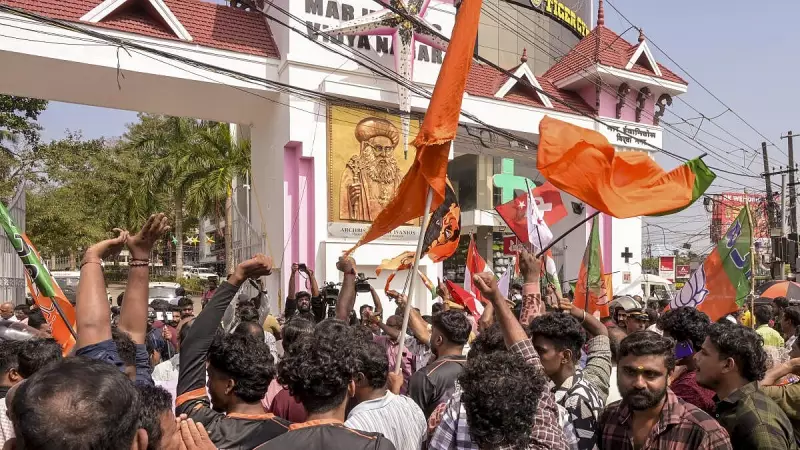
The recent local body elections in Kerala, held in 2025, have sent a powerful message to the state's political establishment. The results, analyzed by commentator Amal Chandra, underscore a fundamental democratic principle that Kerala's voters have consistently upheld. The electorate has demonstrated a sharp ability to separate the appeal of welfare schemes from the broader demands of effective governance.
The Core Democratic Truth Reaffirmed
As noted by Amal Chandra in his analysis published on 16 December 2025, the polls served as a stark reminder that power in Kerala is both conditional and revocable. Voters participated in the democratic process not merely as beneficiaries of state-led welfare but as discerning citizens holding their representatives accountable. The verdict went beyond simple approval or rejection, instead drawing a nuanced line between appreciating social safety nets and demanding administrative competence and transparency.
Decoding the Voter's Mandate
The election outcomes revealed a complex political landscape. While welfare initiatives like pensions, healthcare support, and food security remain popular and politically significant, they did not guarantee an uncontested victory. The local electorate scrutinized performance on hyper-local issues such as infrastructure development, waste management, civic amenities, and the efficiency of local administration. This indicates a mature voter base that expects a dual delivery: continued social welfare coupled with tangible improvements in daily governance.
The results suggest that when welfare becomes a given or an expected baseline, the focus of public scrutiny intensifies on how well basic governance functions are performed. This creates a challenging environment for all political parties, where resting on the laurels of popular schemes is no longer a sufficient strategy for electoral success.
Implications for Kerala's Political Future
The clear distinction drawn by voters has significant long-term implications. Firstly, it reinforces the health of Kerala's democracy, where incumbency is a constant test rather than a guaranteed advantage. Secondly, it pressures all political formations to move beyond a purely welfare-centric narrative and develop compelling governance portfolios.
Parties will now need to craft policies and select candidates who can convincingly bridge the gap between promising welfare and executing efficient local governance. The era where one aspect could overshadow deficiencies in the other appears to be narrowing. The 2025 local body polls have essentially set a higher benchmark, making the electoral contract in Kerala more comprehensive and demanding.
In conclusion, the election has reaffirmed that the Kerala voter is one of the most politically astute in the country. The message is unequivocal: support for welfare is steadfast, but the mandate for power is fragile and must be continually earned through competent administration and responsive governance. This dynamic ensures that the state's political landscape remains vibrant, competitive, and firmly rooted in democratic accountability.