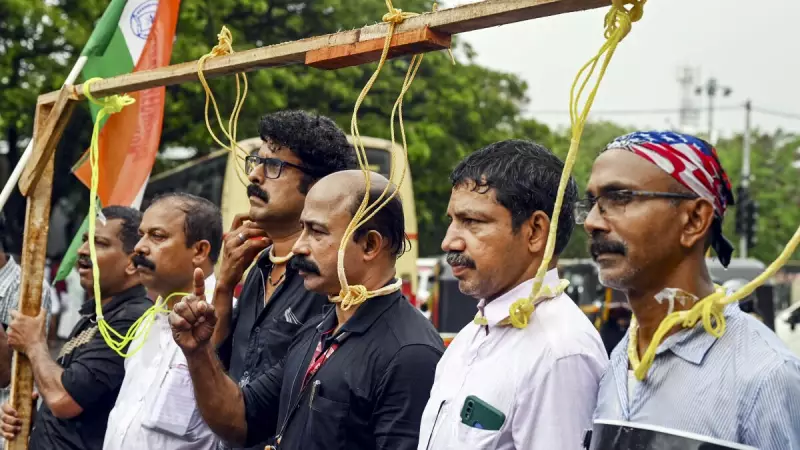
In a development that highlights the complex political landscape surrounding citizenship documentation in India, the Kerala government is pursuing a dual strategy that has caught national attention. While actively challenging the Citizenship Amendment Act (CAA) in the Supreme Court, the state administration is simultaneously expediting the National Population Register (NPR) survey across its territories.
Race Against Time: NPR Survey Acceleration
The Kerala government has directed its officials to complete the intensive NPR household enumeration exercise by April 20, 2024. This accelerated timeline comes despite the state's ongoing legal battle against the CAA in the country's highest judicial forum. The survey, which falls under the broader first phase of Census 2021, involves detailed data collection about every resident in the state.
According to official communications, the state government has instructed district collectors to ensure that the fieldwork for updating the NPR is finished within this tight deadline. This includes the comprehensive house listing and housing census operations that form crucial components of the demographic mapping exercise.
Legal Challenge and Practical Implementation
Kerala finds itself in the unique position of being the first state to legally challenge the CAA while simultaneously implementing the NPR survey that many opposition parties have linked to the controversial citizenship law. The state government filed its petition in the Supreme Court, arguing that the CAA violates the fundamental principles of equality and secularism enshrined in the Indian Constitution.
Despite this legal stance, the practical implementation of the NPR continues unabated. The survey collects vital demographic information including name, relationship to head of household, father and mother's name, sex, date and place of birth, marital status, nationality, educational qualification, occupation and source of livelihood.
Political Implications and Public Response
The simultaneous pursuit of these seemingly contradictory paths has generated significant political discussion. While the state government maintains that the NPR is a separate exercise from the National Register of Citizens (NRC) and CAA, the timing and context have created confusion among some residents and political observers.
Local administration officials have been tasked with managing both the practical implementation of the survey and addressing public concerns about the process. The state's approach reflects the complex balancing act that many regional governments face when dealing with central government initiatives they politically oppose but are constitutionally bound to implement.
As the April 20 deadline approaches, all eyes remain on how Kerala will navigate this delicate situation, with potential implications for other states considering similar legal challenges to the citizenship law while continuing routine administrative functions.