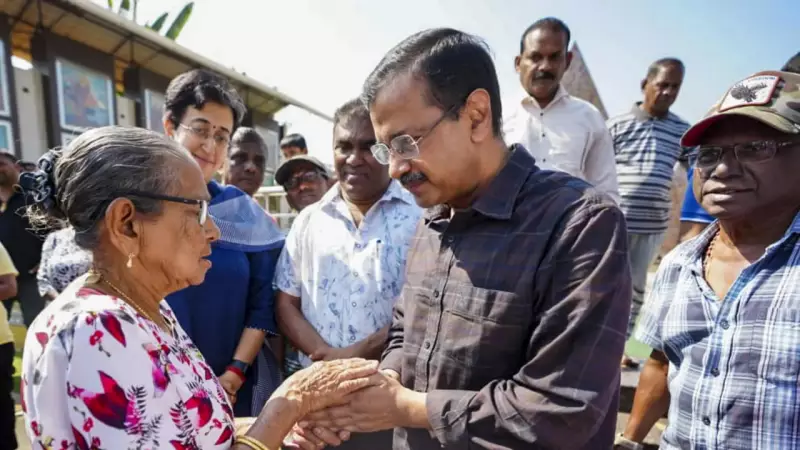
Aam Aadmi Party (AAP) national convener Arvind Kejriwal has pointed to the razor-thin margins of victory in the recently concluded Punjab rural body elections as evidence of a free and fair electoral process. Addressing the media following his party's performance, Kejriwal presented data indicating a large number of intensely contested seats.
Close Margins Tell the Story
Kejriwal revealed a significant statistic: a total of 580 seats were decided by a margin of less than 100 votes. Breaking down these numbers, he stated that the AAP secured victory in 261 of these closely-fought seats, while opposition parties, primarily the Congress, managed to win 319. The AAP leader argued that this distribution demonstrated the absence of any misuse of official machinery by his party, which is in power in the state. "If AAP had misused official machinery, all these seats would have been in AAP's kitty," Kejriwal asserted. "But we wanted a fair election to gauge the voters' mood."
Examples of Razor-Thin Victories
To illustrate the nail-biting nature of the polls, Kejriwal cited several specific examples from across Punjab's districts. He mentioned that in Sangrur district, the Congress party won the Phagwala zila parishad seat by a mere five votes. Other notable narrow wins for the Congress included:

- Kotbhai zone in Sri Muktsar Sahib, won by 41 votes.
- Lakhanpur zone in Fatehgarh Sahib, clinched by just three votes.
- Gill zone in Jalandhar, secured by a margin of three votes.
- Bajra zone in Ludhiana, also won by three votes.
Kejriwal further added that in Gurdaspur, the Congress won both the Chhabuwal and Ghurewaha zones by a margin of four votes each.
Mann Highlights More Tight Contests
Punjab Chief Minister Bhagwant Mann, who was also present, supplemented Kejriwal's remarks by pointing out another instance. He highlighted the Dhura panchayat samiti in the Dhuri area, where the Congress candidate's victory was secured by a scant nine votes. These collective examples underscore the highly competitive nature of the rural elections, where a handful of votes made the critical difference between victory and defeat in numerous constituencies.
The presentation of this data by the AAP leadership is seen as a strategic move to counter any potential allegations of leveraging state power for electoral gain. By emphasizing the narrow wins for the opposition, they aim to build a narrative of transparency and fairness in the electoral exercise, which they frame as a genuine barometer of public sentiment in Punjab's rural heartlands.