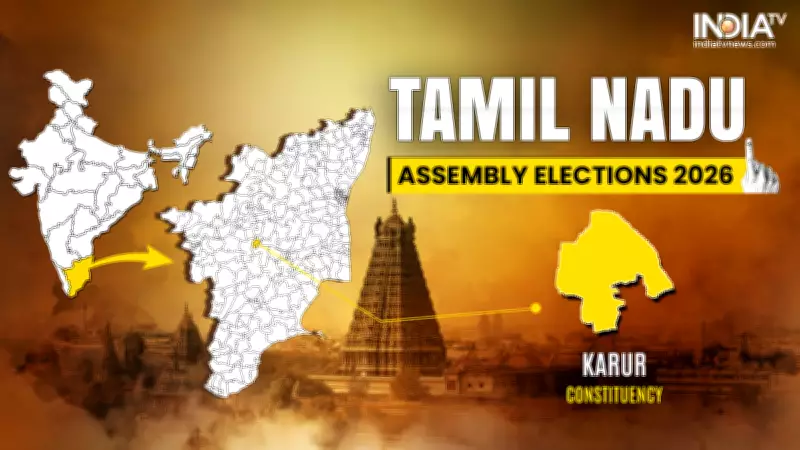
Karur Assembly Seat: A Crucial Battleground in Tamil Nadu's 2026 Elections
The Karur assembly constituency in Tamil Nadu is poised to be a significant focal point as political parties gear up for the state legislative assembly elections scheduled for 2026. This seat, located in the Karur district, has historically witnessed intense electoral competition, making it a bellwether for broader political trends in the region.
Historical Performance and Past Winners
An analysis of past election results reveals a dynamic political landscape in Karur. The constituency has seen victories by multiple parties over the years, reflecting shifting voter allegiances and local issues. In recent elections, the seat has been contested fiercely, with margins often being relatively narrow, indicating a highly competitive environment.
For instance, in the previous assembly polls, the winning candidate secured victory with a margin that underscores the seat's volatility. Historical data shows that incumbents have faced strong challenges, and no single party has maintained a stranglehold on Karur for extended periods. This pattern suggests that voter sentiment here is highly responsive to campaign strategies and ground-level developments.
Victory Margins and Electoral Trends
The victory margins in Karur have varied significantly across election cycles, often influenced by factors such as anti-incumbency, alliance dynamics, and local candidate appeal. In some years, margins have been as low as a few thousand votes, highlighting the seat's status as a swing constituency where every vote counts.
Trends indicate that margins tend to widen or narrow based on broader state-level political waves, but local factors like development projects, caste equations, and candidate credibility also play crucial roles. This makes Karur a microcosm of Tamil Nadu's complex electoral politics, where national and regional issues intersect with grassroots concerns.
Party-Wise Candidates and Strategic Outlook
Major political parties, including the Dravida Munnetra Kazhagam (DMK), All India Anna Dravida Munnetra Kazhagam (AIADMK), and emerging players like the Bharatiya Janata Party (BJP), have fielded candidates in Karur with varying degrees of success. The choice of candidates often reflects strategic calculations aimed at maximizing vote share through caste-based or community-focused appeals.
Looking ahead to the 2026 polls, parties are expected to nominate strong contenders who can leverage local connections and address key issues such as infrastructure, employment, and agricultural distress. Alliance formations will also be critical, as pre-poll partnerships can significantly alter the electoral arithmetic in this closely fought seat.
Key Factors Shaping the 2026 Contest
Several factors will influence the outcome in Karur for the 2026 assembly elections. These include:
- Incumbency Effect: The performance of the sitting MLA and state government will be under scrutiny, with voters likely to reward or penalize based on delivery of promises.
- Local Development: Issues like road connectivity, water supply, and industrial growth in Karur district will be pivotal in swaying voter opinion.
- Alliance Dynamics: The formation of coalitions among major and smaller parties could consolidate or split votes, impacting the final result.
- Candidate Selection: The popularity and track record of nominated candidates will be a decisive factor, as personal appeal often trumps party loyalty in such constituencies.
As parties begin their groundwork, Karur is set to witness a high-stakes battle that could offer insights into the overall political direction of Tamil Nadu. With its history of close contests and evolving voter preferences, this seat remains a key indicator to watch in the run-up to the 2026 elections.