Karnataka Governor's Dramatic Walkout Ignites Constitutional Firestorm in Assembly
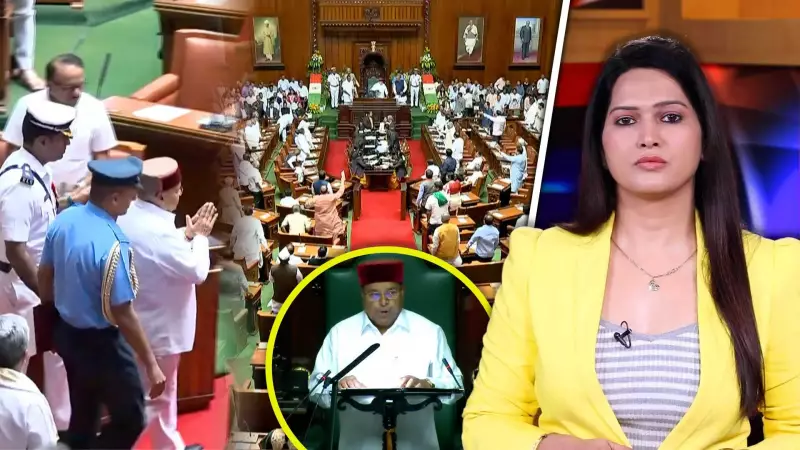
What was supposed to be a routine constitutional ceremony in Karnataka descended into unprecedented political turmoil as Governor Thawarchand Gehlot staged a dramatic walkout midway through his address to the joint sitting of the Legislative Assembly and Council. The Governor read merely two lines from his prepared speech before abruptly leaving the House, plunging the proceedings into chaos and triggering a fierce constitutional showdown.
Congress Government Accuses Governor of Constitutional Violation
The Congress-led state government immediately launched a scathing attack, accusing Governor Gehlot of blatantly violating constitutional norms and conventions. Ministers alleged that the Governor deliberately refused to read crucial paragraphs from the Cabinet-approved address that contained sharp criticism of the Central government's policies.
The contentious portions reportedly highlighted three key areas of concern:

- Alleged failures in the implementation of the Mahatma Gandhi National Rural Employment Guarantee Act (MGNREGA)
- Issues regarding tax devolution to states from the Centre
- Significant losses suffered by Karnataka due to the Goods and Services Tax (GST) regime
Assembly Descends into Chaos as Political Battle Intensifies
As the Governor exited the chamber, the Assembly erupted in pandemonium with opposition members raising slogans and protests echoing through the House. Chief Minister Siddaramaiah, visibly angered by the development, issued a stern warning about pursuing legal action against what he termed a "grave constitutional breach."
The Chief Minister hinted at the possibility of approaching the Supreme Court to address what his government considers an assault on constitutional propriety and state autonomy. This confrontation represents one of the most serious breakdowns in Centre-State relations in recent Karnataka history.
Political Blame Game Escalates Between Congress and BJP
State ministers launched a direct attack on Raj Bhavan, accusing the Governor's office of acting at the behest of the Bharatiya Janata Party (BJP) to undermine the elected state government. They characterized the walkout as a politically motivated act designed to prevent legitimate criticism of Central policies from being formally recorded in the Assembly.
The BJP countered these allegations vigorously, asserting that the Congress party was "politicizing a constitutional forum" for its own agenda. Opposition leaders argued that the state government was attempting to use the Governor's address as a platform for partisan attacks rather than focusing on governance issues.
National Implications of the Karnataka Confrontation
This explosive episode in Karnataka has reignited a crucial national debate about the role and boundaries of gubernatorial authority in India's federal structure. With similar confrontations emerging in other opposition-ruled states across the country, the Karnataka incident has brought several fundamental questions to the forefront:
- How far can a Governor exercise discretion in performing constitutional duties?
- Where does constitutional obligation end and political consideration begin?
- What mechanisms exist to resolve such deadlocks between state governments and Governors?
- How can the delicate balance between Centre and States be maintained in such contentious scenarios?
The Karnataka Assembly walkout has thus transformed from a state-level political skirmish into a significant constitutional moment with potential ramifications for India's federal democracy. As legal experts analyze the implications and political parties prepare for further confrontation, the incident underscores the growing tensions in Centre-State relations and raises critical questions about constitutional propriety in India's political landscape.