Karnataka Governor Sparks Controversy by Declining to Read Full Government-Prepared Address
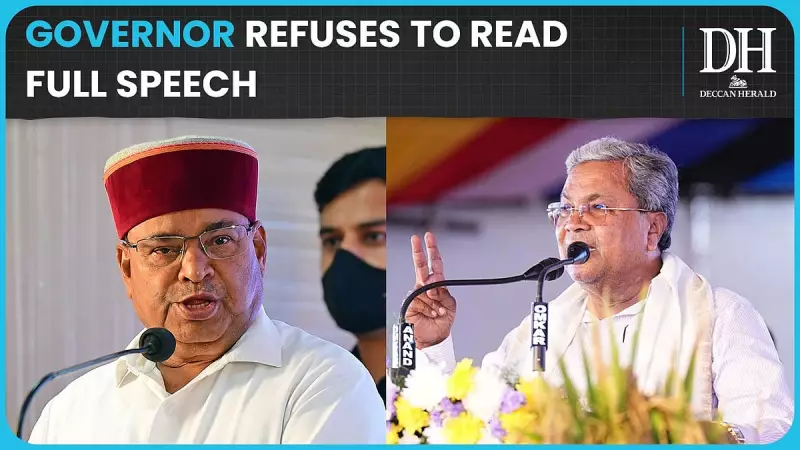
In a move that has ignited a significant political debate, Karnataka Governor Thaawarchand Gehlot refused to read the full address prepared by the state government during a recent official event. This incident has raised questions about constitutional propriety and the delicate balance of power between state governments and gubernatorial offices in India.
Constitutional Propriety Cited as Reason for Omission
Governor Gehlot, a senior political figure, reportedly cited constitutional norms as the primary reason for his decision to skip portions of the address. According to sources, he expressed concerns that certain sections of the prepared text might not align with established protocols or could be perceived as politically motivated. This action underscores the ongoing tensions between appointed governors and elected state governments, particularly in regions with differing political affiliations.
The address, typically a formal statement outlining the government's policies and achievements, is prepared by the state administration but delivered by the governor in a ceremonial role. Gehlot's refusal to read it in its entirety has drawn attention to the interpretative powers governors hold under the Indian Constitution, which sometimes lead to conflicts over autonomy and governance.

Political Reactions and Implications for State Autonomy
The incident has prompted swift reactions from various political quarters in Karnataka. Members of the state government have expressed disappointment, arguing that the governor's move undermines the democratic mandate of the elected administration. They contend that the address reflects the will of the people as represented by their government, and any alteration or omission could be seen as an overreach of gubernatorial authority.
On the other hand, supporters of Governor Gehlot have defended his stance, emphasizing that governors have a duty to uphold constitutional values and avoid content that might be contentious or inappropriate. This debate taps into broader discussions about federalism in India, where similar incidents have occurred in other states, highlighting the need for clearer guidelines on such matters.
Historical Context and Precedents
This is not the first time a governor's role has come under scrutiny in Karnataka or other Indian states. Past instances have seen governors making modifications to addresses or delaying their delivery, often leading to legal and political challenges. These episodes reflect the complex interplay between central appointments and state governance, a recurring theme in India's political landscape.
Experts suggest that such conflicts could impact administrative efficiency and public trust, calling for a review of protocols to prevent future disputes.
Looking Ahead: Potential Resolutions and Ongoing Debates
As the controversy unfolds, stakeholders are calling for dialogue to resolve the impasse. Suggestions include establishing joint committees or referring the matter to constitutional experts to ensure that both gubernatorial and state government prerogatives are respected. The outcome of this incident may set a precedent for how similar situations are handled across India, influencing the dynamics of center-state relations.
In summary, Governor Thaawarchand Gehlot's refusal to read the full Karnataka government-prepared address has sparked a multifaceted debate on constitutional norms, political autonomy, and governance. This event serves as a reminder of the ongoing challenges in balancing power within India's federal structure, with implications for democracy and administrative harmony.