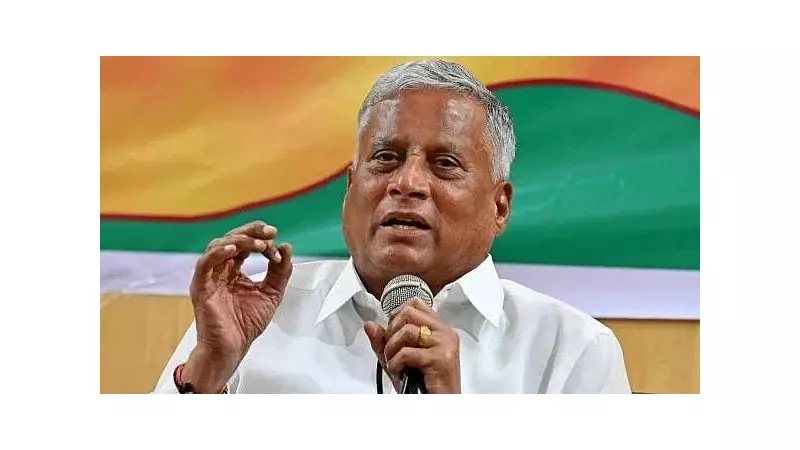
Union Minister V Somanna has publicly criticized the Karnataka government for its failure to achieve the targets set under the Jal Jeevan Mission, a flagship program aimed at providing tap water connections to all rural households. The minister highlighted that while many states and union territories have successfully reached 100% coverage, Karnataka has lagged behind despite consistent support from the central government.
Central Support Meets State Inaction
In a strongly worded post on social media platform X, Somanna expressed his disappointment with the Karnataka administration's performance. The minister revealed that the state government has not been releasing its matching grant share, which has significantly hampered the mission's progress in the region.
"Many states and UTs have achieved the target of 100% rural household tap water connections," Somanna stated in his post dated November 19, 2025. He emphasized that despite persistent support and timely guidance from the Government of India, the Karnataka government could not meet the deadline for this crucial infrastructure project.
The Ripple Effects of Delayed Implementation
The Jal Jeevan Mission represents one of the most ambitious water infrastructure projects in India's history. The program's successful implementation in other states has demonstrated its potential to transform rural living conditions and improve public health outcomes.
The failure to meet targets in Karnataka means that thousands of rural households continue to lack access to safe tap water, potentially affecting health, sanitation, and overall quality of life. The minister's public statement underscores the growing frustration within the central government about the pace of implementation in certain states.
What This Means for Karnataka's Rural Population
The delay in achieving full coverage under the Jal Jeevan Mission has direct consequences for rural communities across Karnataka. Without reliable tap water connections, many households must still depend on traditional water sources that may not be safe or easily accessible.
The situation raises questions about coordination between state and central authorities and the effective utilization of resources allocated for critical development projects. As the debate continues, the immediate concern remains the welfare of rural families awaiting this basic necessity.
With the minister's public statement bringing this issue to national attention, pressure is mounting on the Karnataka administration to address the funding gaps and accelerate the mission's implementation across the state.