Karnataka Assembly Erupts Over 'IAS Means I Am Sorry' Remark by LoP Ashoka
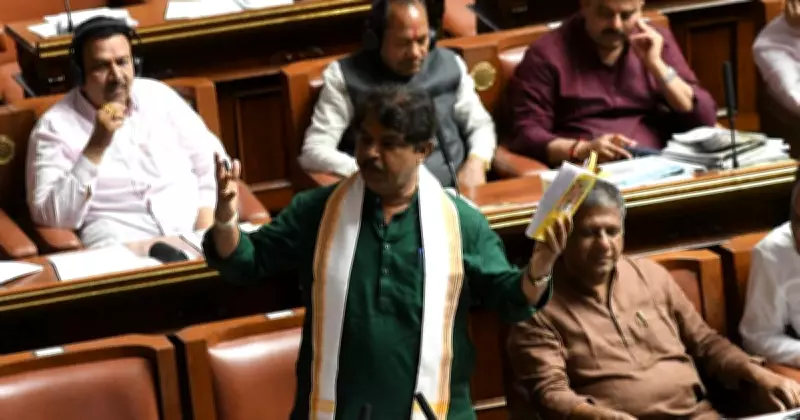
The Karnataka Legislative Assembly was the scene of a significant political controversy on Thursday, as Leader of the Opposition R Ashoka made a provocative statement that has ignited widespread debate across the state. During a heated discussion on governance and administrative efficiency, Ashoka remarked, "IAS stands for I Am Sorry," directly targeting the Indian Administrative Service officers serving in Karnataka.
Context of the Controversial Statement
The remark was made during a session focused on reviewing the performance of various government departments and addressing public grievances. Ashoka, a senior Bharatiya Janata Party leader, expressed frustration over what he described as systemic failures and delays in bureaucratic processes. He argued that the state's IAS officers often apologize for inefficiencies rather than taking proactive measures to resolve issues, leading to a culture of excuses that hampers development and public service delivery.
Ashoka elaborated on his criticism, stating, "The people of Karnataka are tired of hearing 'sorry' from officials when projects are delayed or services are not provided. This attitude reflects a deeper problem within the administrative machinery that needs urgent reform." His comments were met with immediate reactions from ruling party members, who defended the bureaucracy and accused Ashoka of undermining the hard work of civil servants.
Reactions from the Assembly and Political Circles
The assembly session quickly turned tumultuous following Ashoka's statement. Members of the ruling Congress party strongly objected, with some demanding an apology for what they termed as an insult to the IAS cadre. In response, Ashoka stood by his remarks, emphasizing that his intention was to highlight governance lapses and not to disrespect individual officers.
"This is not about targeting individuals but about addressing a systemic issue where accountability is lacking," Ashoka clarified during the debate. He cited specific examples, such as delays in infrastructure projects and poor implementation of welfare schemes, to support his argument that bureaucratic inefficiencies are costing the state both time and resources.
Outside the assembly, political analysts have noted that this incident underscores the ongoing tensions between the opposition and the government in Karnataka, particularly in the lead-up to upcoming local elections. The remark has also sparked discussions on social media and among civil society groups, with opinions divided on whether it was a valid critique or an unfair generalization.
Broader Implications for Governance in Karnataka
This controversy brings to light larger questions about administrative reform and public accountability in Karnataka. Experts suggest that while Ashoka's comment may be seen as hyperbolic, it points to genuine concerns regarding bureaucratic red tape and the need for more efficient governance mechanisms.
- Increased Scrutiny: The incident has prompted calls for greater transparency and performance reviews of IAS officers in the state.
- Political Ramifications: It could influence public perception ahead of elections, with both parties likely to use the issue to rally support.
- Administrative Response: There may be pressure on the state government to initiate reforms to improve bureaucratic responsiveness and reduce delays.
In conclusion, the 'IAS means I Am Sorry' remark by LoP R Ashoka has not only stirred the Karnataka Assembly but also ignited a broader conversation on governance and administrative efficiency. As the debate continues, it remains to be seen how this will impact policy-making and public trust in the state's bureaucracy.