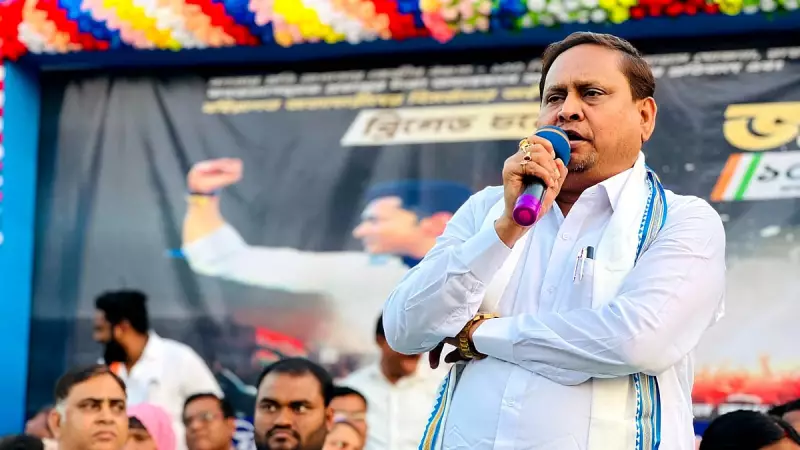
In a significant political development, senior Trinamool Congress leader Humayun Kabir has made serious allegations regarding an event in West Bengal. He claims that conspiracies are being hatched to disrupt a program linked to the construction of the Babri Masjid. This statement comes amidst his own major political announcement.
A Leader's Bold Allegations and Political Move
Humayun Kabir, who had previously announced his decision to resign as a Member of the Legislative Assembly (MLA), reiterated his stance. He confirmed his plan to launch his own political party later in the month of December 2025. Against this backdrop of personal political transition, he leveled the accusation about the planned disruption. Kabir did not specify the nature of the event or the alleged conspirators in his claim, reported on December 6, 2025.
Prediction for the 2026 Assembly Elections
Alongside the conspiracy allegation, Kabir made a striking electoral prediction. He asserted that Muslim candidates would emerge victorious from a substantial number of constituencies in the upcoming state elections. Specifically, he claimed that Muslim candidates will win 90 assembly constituencies in the 2026 polls. This forecast highlights the ongoing political calculations surrounding community-based voting patterns in the state.
Implications for West Bengal's Political Landscape
These statements from a senior leader, who is on the verge of leaving the ruling party, add a new layer of complexity to West Bengal's politics. The allegation about disrupting an event connected to a historically sensitive issue like the Babri Masjid construction could inflame political tensions. Furthermore, his specific prediction about Muslim candidates' success signals a focus on identity politics as the 2026 elections draw nearer. Kabir's upcoming party launch and these pronouncements will be closely watched for their impact on the state's electoral alliances and discourse.
The developments underscore the volatile and dynamic nature of West Bengal's political arena, where issues of history, identity, and electoral strategy are deeply intertwined.