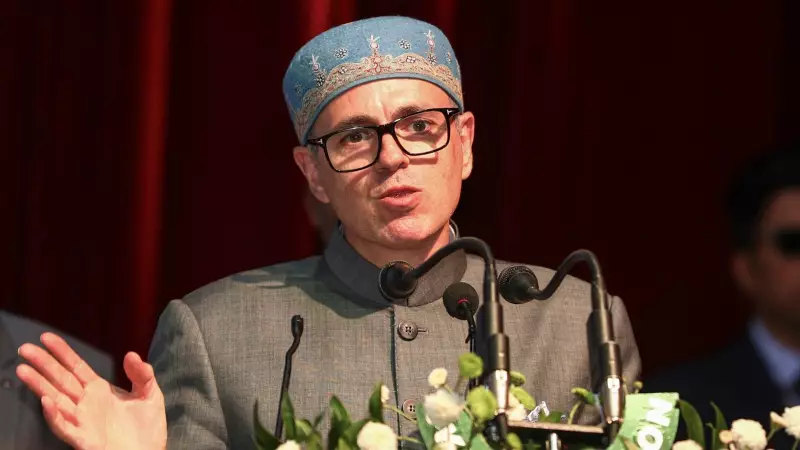
Facing intense public pressure and internal dissent, the Jammu and Kashmir government led by Chief Minister Omar Abdullah has taken a crucial step to address the contentious reservation issue that has sparked widespread protests. A Cabinet Sub Committee has cleared a report proposing significant changes to the quota matrix, aiming to restore a balance by increasing the share of seats available for the general, or open merit, category.
The Quota Conundrum and Public Backlash
The crisis began in March 2024, after the Parliament of India brought more groups under the Scheduled Tribes (ST) category in Jammu and Kashmir. Following this, Lieutenant Governor Manoj Sinha amended the J&K Reservation Rules of 2005. This amendment enhanced the ST-reserved seats in government jobs and educational institutions from 10% to 20% of the total. Simultaneously, reservation for Other Backward Classes (OBC) was also increased, with 15 new groups being added to the OBC list.
The cumulative effect of these changes was dramatic. The total reservation quota in J&K skyrocketed from 43% to 70%, leaving only 30% of seats for the open merit category. This triggered immediate unrest, as a majority of the Union Territory's population falls into this general category. Youths took to the streets in protest, and in a significant show of internal discord, National Conference MP Aga Ruhulla Mehdi joined the protests against his own party's government.
The Government's Calculated Response
While the ruling National Conference (NC) had promised to align reservations with population figures, the Abdullah government proceeded with caution. Officials were wary of a rushed move that could trigger a reverse backlash from communities whose quotas would be reduced.
The Cabinet Sub Committee, whose report has now been accepted by the full Abdullah Cabinet, found a middle path. A senior government official explained the constraints, stating, "The ST quotas for ST-I and ST-II can't be altered as they came from Parliament. That left us few options to work with." The Bill passed by Parliament in February 2024 had created sub-classifications within STs as ST-I and ST-II while expanding the list.
Consequently, the committee's report leaves the quotas for Scheduled Tribes (ST) and Scheduled Castes (SC) completely untouched. Instead, it recommends carving out additional open merit seats from two other categories: Residents of Backward Areas (RBA) and the Economically Weaker Sections (EWS).
Rationale Behind the Proposed Reallocation
The proposed adjustment is not arbitrary. The official provided the logic, noting that "the bulk of the RBA population that came under J&K is now in Ladakh and no longer part of the Union Territory. So shifting some of these seats to open merit makes sense." This geographical and administrative change following the reorganisation of the former state provided a viable avenue for the government to address the imbalance without touching the politically sensitive ST quota mandated by the central government.
The primary goal of this reallocation is to ensure that 50% of the total seats and jobs remain available for the open merit category, a significant increase from the current 30%. This move is seen as a direct response to the protests and the warning from MP Mehdi, who had threatened to rejoin the agitations after the Parliament's Winter Session if the policy was not reviewed.
As the Omar Abdullah government navigates this complex socio-political challenge, the proposed changes represent a delicate attempt to pacify the protesting youth and address concerns over fair opportunity, while simultaneously avoiding a fresh wave of discontent from newly empowered reserved groups.