Jehanabad's Long Road from Violence to Viable Development
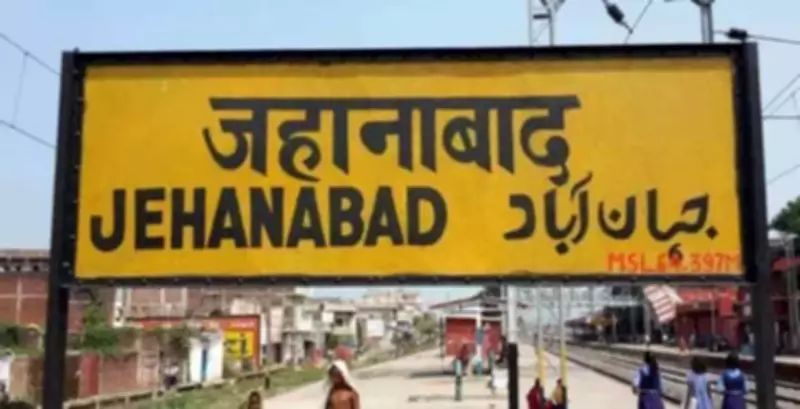
For decades, the district of Jehanabad in Bihar has been synonymous with turmoil and tragedy. From the assassination of former Deputy Chief Minister Jagdeo Prasad to notorious jail breaks, brutal massacres, and rampant extremist activities, this region consistently made headlines for all the wrong reasons. While the era of mass violence has largely subsided and a fragile peace has taken hold, genuine prosperity continues to evade this predominantly agricultural area.
Persistent Natural and Infrastructural Challenges
The recent concerns raised by Ghosi MLA Ritu Raj Kumar highlight a critical and recurring issue: devastating flash floods. These floods, primarily caused by excess, unchanneled water from the Falgu river, wreak havoc on crops and create a cascade of allied problems for local communities. The threat is not new; demands for constructing a dam on the Falgu river near Bitho village in neighboring Gaya district have been voiced for years.
"During his 11-month tenure as Chief Minister, Jitan Ram Manjhi showed interest in dam construction on the Falgu river, but little could be done on the ground," noted Rajesh Kumar, a resident of the Hulasganj area. Such a dam would serve a dual purpose: managing destructive water flow and helping to maintain the vital water table in both Jehanabad and Gaya districts.

A Political Legacy with Little Tangible Development
Local residents express deep frustration over the disconnect between Jehanabad's political pedigree and its developmental stagnation. The district has produced several towering political figures, including the late Ramashray Prasad Singh, who served as the number two in successive Congress governments in Bihar, along with Ram Jatan Sinha, Arun Kumar, and Jagdish Sharma. Yet, this influential legacy has translated into minimal concrete progress for the district's infrastructure and economy.
"Jehanabad has suffered for a long time," stated Satish Kumar, former MLA of the Makhdumpur constituency. He pointed to neglected basic issues, such as the perennial waterlogging at the railway underpass in the district headquarters town, and the alarming rate of road accidents. According to him, no less than 81 people have died on NH-22 alone in the last 18 months, yet the district lacks a trauma center.
An Economic Desert Beyond Agriculture
The economic landscape of Jehanabad is stark. The absence of proper marketing facilities for agricultural produce forces farmers into distress sales, crippling their livelihoods. While there is significant potential for agro-based industries, the district, as per official records, does not host a single medium-scale industrial unit.
Economic activity is confined to a handful of micro-units involved in agarbatti (incense stick) and bangle making, iron moulding, and some wooden furniture production. The service sector, widely regarded as a key stimulant for modern economic growth, is conspicuously absent, leaving the local economy underdeveloped and vulnerable.
Attempts to seek an official development blueprint were met with silence, as Preeti, the deputy development commissioner of the district, did not respond to calls made to her official number.
The Fragile Link Between Peace and Prosperity
Experts warn that without meaningful development, the hard-won peace in Jehanabad remains precarious. "In the absence of development, peace would remain fragile," cautioned Bishwanath Singh, former Head of the Post Graduate Department of Economics at Magadh University. His statement underscores the critical need to address the district's infrastructural deficits, economic voids, and environmental challenges to build a stable and prosperous future, finally moving beyond its troubled past.