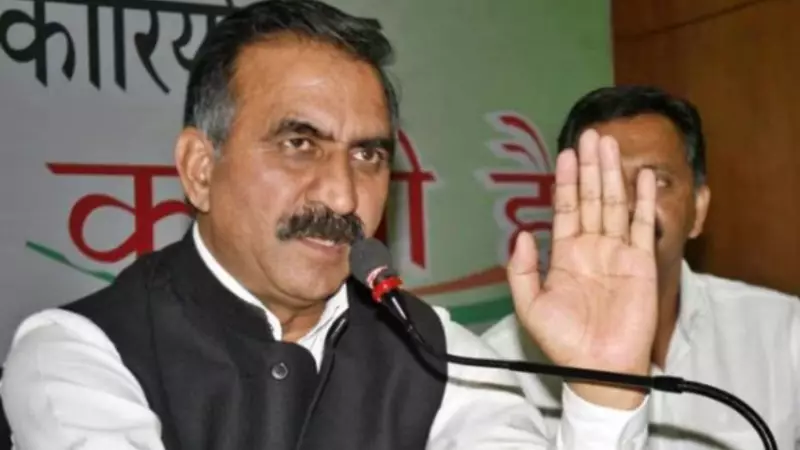
In a decisive move to combat the drug menace, Himachal Pradesh Chief Minister Sukhvinder Singh Sukhu has announced a substantial cash reward for citizens who provide credible information leading to the crackdown on heroin, locally known as 'chitta'. The rewards range from Rs 10,000 to a staggering Rs 10 lakh, as part of a new government initiative to turn the anti-narcotics drive into a mass movement.
Turning Public into Partners: The Chitta Information Reward Scheme
The announcement was made on Tuesday, December 2, 2025, during the sixth state-level meeting of the Narcotics Coordination Centre (NCORD) held in Dharamshala. Under the newly launched "Chitta Information Reward Scheme," any individual can share actionable intelligence by calling the emergency number 112 or by contacting their nearest police station. The government has assured that the reward money will be disbursed to the informant within 30 days of the information leading to a successful action.
Chairing the high-level meeting, CM Sukhu directed officials to intensify and streamline the ongoing campaign with the ultimate goal of completely eliminating chitta and all other narcotic substances from the hill state. He made a fervent appeal to the public to cooperate with authorities in eradicating this social scourge.

A Multi-Pronged Strategy: Enforcement, Rehabilitation, and Accountability
The government's strategy extends beyond just rewards for information. CM Sukhu revealed a comprehensive action plan targeting all aspects of the drug trade. He disclosed that 60 government employees, including 15 police personnel, have been found involved in chitta trafficking. While five have already been dismissed, legal proceedings are underway against the others. All department heads have been directed to submit detailed reports on employees involved in drug trafficking by December 10.
In a significant step to dismantle the financial backbone of drug networks, the Chief Minister ordered district administrations to identify properties acquired through the drug trade. Reports on such properties are to be submitted by December 10, after which they will be demolished. "Those involved will be strictly punished," Sukhu asserted.
The administration is also focusing on sensitive areas. A special deployment of CID and police personnel has been made in 234 panchayats identified as highly sensitive to drugs. Deputy Commissioners have been instructed to form anti-drug committees in these panchayats.
Beyond Policing: Counselling, Prevention, and Systemic Reforms
Recognizing that enforcement alone is not enough, the Sukhu government is bolstering support systems. The state is strengthening counselling, treatment, and rehabilitation mechanisms for those affected by drug abuse. Drug testing has been made mandatory for all government recruitments.
Preventive measures in educational institutions are being amplified. Anti-Drug Clubs, Prahari Clubs, and peer education programmes are being made more active in schools and colleges. Furthermore, the state is maintaining strict surveillance on cannabis cultivation and conducting thorough inspections of pharmaceutical units.
To ensure faster justice, the prosecution directorate has been directed to expedite appeals in cases under the Narcotic Drugs and Psychotropic Substances (NDPS) Act, review acquittals, and work towards improving conviction rates. In a move to institutionalize accountability, parameters related to supply reduction, demand reduction, and harm reduction under drug control will now be included in the annual confidential reports (ACRs) of concerned officers.
CM Sukhu highlighted that Himachal Pradesh was the first state in India to classify its panchayats into red, yellow, and green categories based on drug prevalence, identifying 12,000 individuals under this model—a framework now being recognized nationally as exemplary.

The high-level meeting was attended by Chief Secretary Sanjay Gupta, Additional Chief Secretary Shyam Bhagat Negi, DGP Ashok Tewari, and other senior state officials. Deputy Commissioners and Superintendents of Police from all districts joined virtually. Representatives from central agencies like the Narcotics Control Bureau, Enforcement Directorate, and Directorate of Revenue Intelligence were also present.