In a dramatic revelation that sheds new light on one of India's most significant counter-insurgency operations, it has emerged that top Maoist commander Madvi Hidma was actively preparing to surrender through constitutional means just days before he was killed in an encounter. A journalist who maintained regular contact with the elusive rebel leader has shared exclusive details about Hidma's growing disillusionment with armed struggle and his desire to return to civilian life.
The Final Meeting: A Commander's Change of Heart
The journalist, who met Hidma multiple times in the dense forests spanning the Chhattisgarh-Telangana-Andhra Pradesh border region, described their last meeting on September 3 deep inside Indravati National Park. "He said the movement must now walk through the Constitution, not guns," the journalist revealed, painting a picture of a man torn between ideology and practical reality.
During that fateful meeting, the journalist informed Hidma that senior politburo leaders were warming up to the idea of peace talks. "Hidma listened, silent and thoughtful. He said: 'If the top leadership agrees, and my group gives consent, I will too. This fight cannot be won against the state. I realize that we cannot force our ideology on people through arms,'" the journalist recalled.

The Surrender Plan Takes Shape
The turning point came on November 1 when the journalist received a phone call from someone within the Maoist network stating: "Dada, we want to meet you… the way Rupesh alias Satish surrendered, we also want to discuss tribal issues and lay down arms before the samaj." This marked the first time in decades that Hidma had shown genuine interest in surrender.
The groundwork for surrender was nearly complete. The journalist verified through social organizations that Hidma was indeed preparing to surrender in Andhra Pradesh. "Yes, Hidma has said he will come. He'll sit with village elders and hand over his weapons peacefully," the organizations confirmed.
Conflicting Signals from the Jungle
However, conflicting messages emerged from the Maoist camp. A courier delivered a digital chip containing a press note issued by Devji, Hidma's closest aide, in Hindi, Telugu and English, calling for the armed struggle to continue. Simultaneously, Hidma was sending messages about surrender through the same channel.
"They were thinking in two different directions," the journalist noted, highlighting the internal divisions within the Maoist leadership. This confusion created uncertainty about whether the proposed meeting was genuine or a potential trap.
Family and Community Reaction
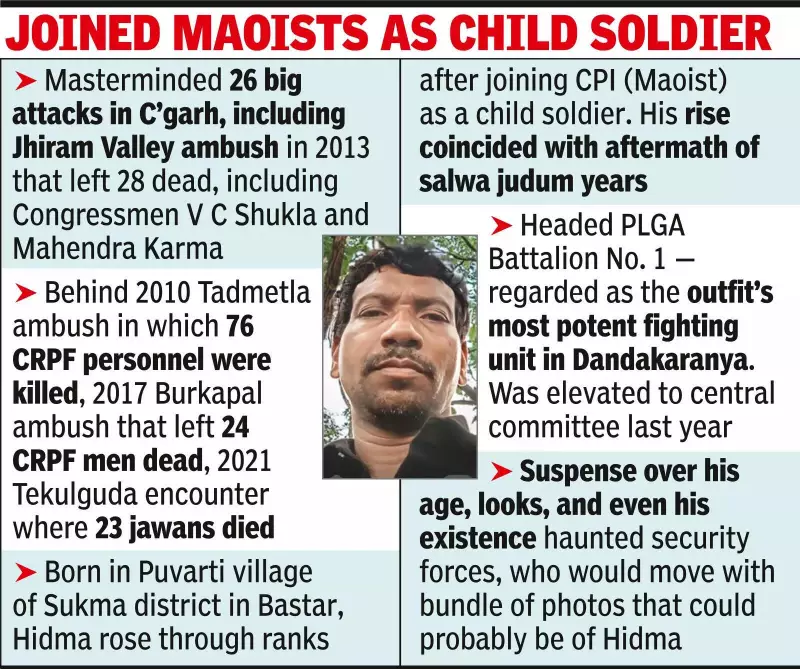
When news of Hidma's killing reached his family in Puvarti village, they refused to identify his body, expressing disbelief at the circumstances of his death. "Hidma was the kind of man who would fight until his last breath — kill four or six around him and die only after that. That's how we imagined his end, not like this," a family member stated.
Villagers in Puvarti remembered Hidma as "just a boy running barefoot on the same paths as us" before the forest swallowed him. While many youths in Bastar saw him as a rebellious symbol—a local boy who rose to the top ranks of an organization dominated by outsiders—elders insisted the violence destroyed more than it protected.
Implications for Peace Process
Security officers believe Hidma's death could lead to the collapse of the Maoist military wing in south Bastar, with many cadres already in touch with police about surrender. However, the journalist expressed concern about the timing, stating: "If this is the fate of someone who wanted to surrender constitutionally, how will we convince young tribals who wish to quit the gun?"
Senior journalist Suresh Mahapatra, based in Bastar, confirmed that surrender talks were underway. "From the signals we were getting, it was clear that deputy chief minister Vijay Sharma went to Puvarti, there were strong indications that Hidma might surrender. Talks were definitely underway," Mahapatra stated.
The journalist who last spoke to Hidma concluded emotionally: "This wasn't an encounter. It was the end of a man who finally wanted peace. Hidma trusted the process. Someone, somewhere, betrayed that trust."