Haryana Farmers Stage Protest March Against India-US Trade Agreement
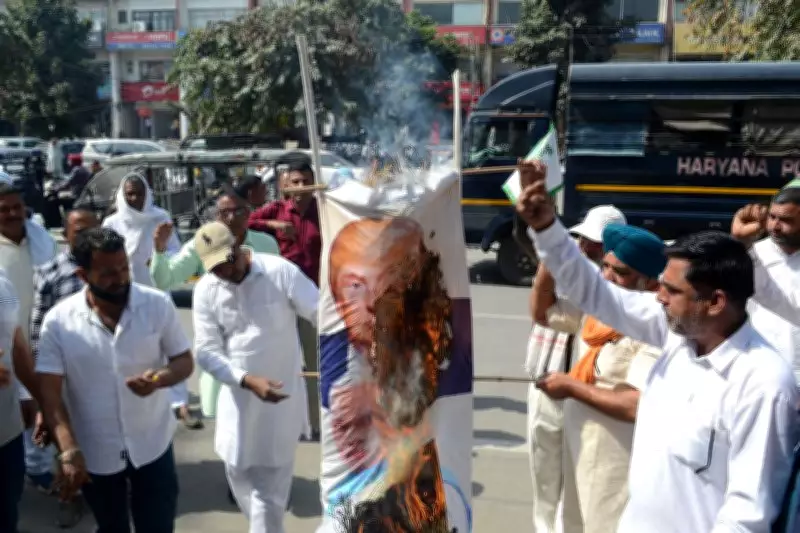
In a significant display of dissent, farmers in Haryana took to the streets to voice their opposition to the trade deal between India and the United States. The protest, which saw a large turnout, culminated in the symbolic burning of effigies representing Prime Minister Narendra Modi and former US President Donald Trump. This action underscores the deep-seated concerns among agricultural communities regarding the potential repercussions of international trade agreements on local farming practices and livelihoods.
Key Issues Raised by Protesting Farmers
The farmers articulated several grievances during the march, primarily focusing on how the India-US trade deal might adversely affect the agricultural sector. They expressed fears that the agreement could lead to an influx of cheaper imported goods, thereby undermining domestic produce and threatening the economic stability of farmers. Additionally, there were concerns about the lack of adequate consultation with farming communities before finalizing such deals, which they argue neglects their interests and voices.
Impact on Local Agriculture: Protesters emphasized that trade deals often prioritize corporate interests over small-scale farmers, potentially leading to market distortions and reduced income for those reliant on agriculture. They called for more transparent negotiations and safeguards to protect indigenous farming from foreign competition.
Symbolic Acts of Protest
The burning of effigies of PM Modi and former President Trump served as a powerful symbolic gesture, reflecting the farmers' frustration with political leaders they perceive as disregarding agricultural welfare. This act is part of a broader pattern of protests in India, where effigy-burning is commonly used to express dissent against policies or figures seen as detrimental to public interests.
Historical Context: Similar protests have occurred in the past, with farmers across India mobilizing against various government policies, highlighting the ongoing tensions between agricultural communities and policymakers over trade and economic reforms.
Government Response and Future Implications
While the government has yet to issue an official statement specifically addressing this protest, it has previously defended trade agreements as beneficial for economic growth and international relations. However, the persistent opposition from farmers suggests that such deals may face continued resistance unless more inclusive approaches are adopted.
- Farmers demand greater involvement in trade negotiations.
- Calls for policies that ensure fair competition and support for domestic agriculture.
- Potential for further protests if concerns remain unaddressed.
This protest in Haryana adds to the ongoing discourse on balancing global trade with local agricultural sustainability, a critical issue for India's economy and food security.