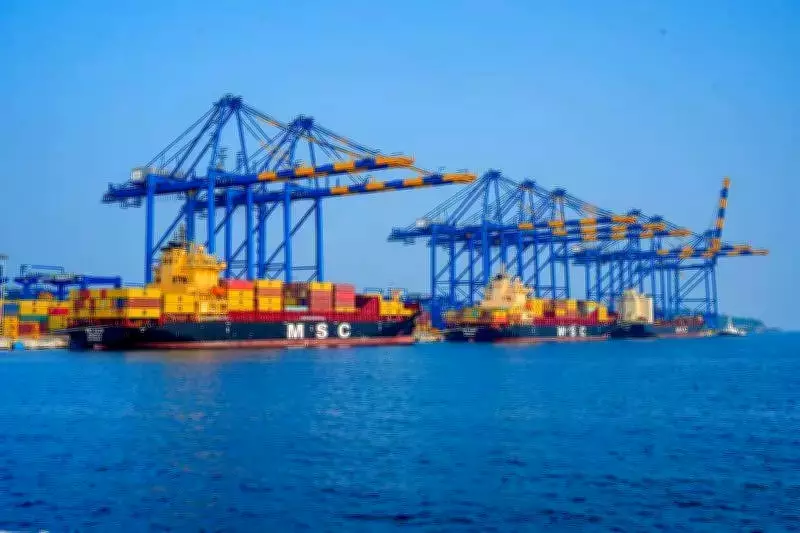
Thiruvananthapuram's Outer Area Growth Corridor Faces Government Approval Delay
Thiruvananthapuram: A full year has passed since the Capital Region Development Programme-II (CRDP-II) submitted the master plan for the ambitious Outer Area Growth Corridor (OAGC) project, yet the state government has still not granted formal approval. This bureaucratic foot-dragging is raising serious concerns that it could stall critical industrialization efforts linked to the Vizhinjam International Seaport, undermining economic growth in the region.
Investor Frustration Mounts Over Delayed Industrial Ecosystem
The prolonged delay has deeply frustrated private investors and urban planners who view the corridor as absolutely central to creating a robust industrial ecosystem around the deep-water port. Sources within CRDP-II revealed that the master plan, which envisions port-led growth stretching from Vizhinjam to Navaikulam through a series of eight economic clusters aligned with the proposed Thiruvananthapuram outer ring road (ORR), has been under review in the local self-government (LSG) department for over twelve months.
Critics have alleged that the government is deliberately delaying the process because the plan favors land pooling over traditional land acquisition methods. This approach requires negotiating with multiple stakeholders rather than enabling quick purchase by the state, making it more complex but potentially fairer. "The file circulated between departments without clear direction," said an official familiar with the matter. "Local bodies raised procedural concerns, especially regarding land pooling and implementation of the draft Special Investment Region (SIR) Bill, which was seen as a prerequisite for the project."

Special Investment Region Bill Shelved, Adding to Complications
The SIR concept was intended to replace compulsory acquisition with a more collaborative approach to land assembly, promising to make large land parcels available for investors more efficiently while offering regulatory incentives. However, the LSG department's reservations, rooted in the complexities of coordinating dozens of local self-governments across the corridor, have significantly slowed progress. Meanwhile, the proposal to introduce the land-pooling bill in the state assembly was deferred last year, effectively shelving the framework that could facilitate the OAGC's execution.
Officials from the industries department indicated that the delay is also linked to the revenue department's ongoing review of land dimensions and implementation issues. "Decentralizing norms for SIR implementation is a major concern," principal secretary APM Mohammed Hanish told TOI. "That requires reconciliation between departments. However, the government will intervene to resolve these matters." He added that Kinfra is continuing efforts to identify viable land for investment, stressing that a minimum of 1,000 acres would be required to kickstart the industrial clusters. "We have identified over 500 acres so far," he noted.
Investor Confidence Wanes as Uncertainty Persists
Investor interest, which was once strong, has waned as uncertainty persists. "Many investors showed interest but withdrew due to lack of clear communication from the government," a source close to CRDP said, adding that logistics firms and manufacturing players sought land in the district but lost confidence due to the prolonged delays. This erosion of trust threatens to derail the project's potential to transform the area into a major industrial hub, leveraging the strategic advantages of the Vizhinjam port.
The stalled approval process highlights broader challenges in balancing development goals with administrative coordination and stakeholder engagement. As the government grapples with these issues, the future of the Outer Area Growth Corridor remains in limbo, casting a shadow over Kerala's industrial aspirations.