Goa Government Launches Probe into Unlawful Gathering at Minister's Residence
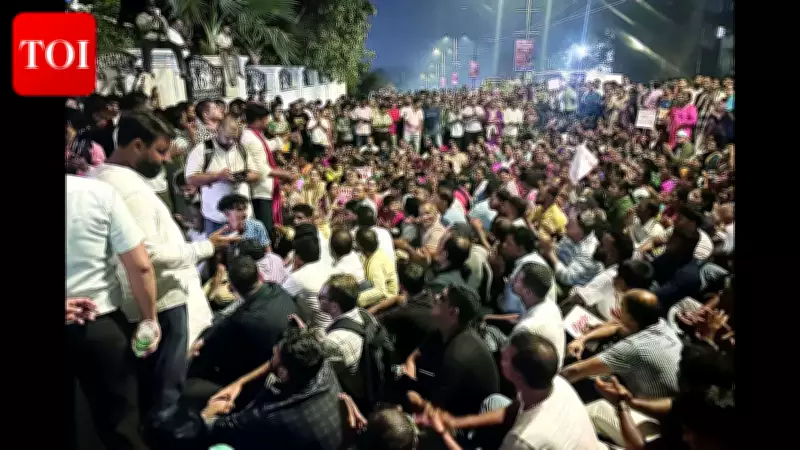
The Goa state government has initiated a formal investigation into the circumstances that led to an unlawful gathering outside the residence of Town and Country Planning (TCP) Minister Vishwajit Rane on February 23. In response to the incident, the government has constituted a three-member fact-finding committee to thoroughly examine the causes and any administrative lapses involved.
Formation of the Fact-Finding Committee
The committee is chaired by Revenue Secretary Sandip Jacques, with South Goa Collector Egna Cleetus and Superintendent of Police Tikam Singh Verma serving as the other two members. This panel has been tasked with delving into the details of the gathering and identifying the factors that contributed to the breach of law and order.
Chief Secretary V. Candavelou emphasized the urgency of the matter, stating, "The committee will investigate the causes and lapses that led to this unlawful gathering outside the residence of the minister. The report will be submitted by the committee to this office at the earliest for onward submission to the government." This directive underscores the government's commitment to addressing the incident promptly and ensuring accountability.
Police Action and FIR Details
Concurrently, the Goa Police have taken legal action by filing a First Information Report (FIR) against several individuals involved in the gathering. The accused include Leader of the Opposition Yuri Alemao, Congress Aldona MLA Carlos Ferreira, AAP Benaulim MLA Venzy Viegas, AAP Velim MLA Cruz Silva, Revolutionary Goans Party (RGP) president Manoj Parab, along with numerous activists and approximately 1,500 supporters.
The FIR alleges that these individuals organized a march to Minister Rane's residence in Dona Paula, resulting in the blockage of a major road for nearly eight hours. This disruption not only violated public order but also caused significant inconvenience to local residents and commuters.
Scope of the Investigation
The fact-finding committee's investigation will focus on multiple aspects, including the planning and execution of the gathering, the role of political leaders and activists, and any failures in law enforcement or administrative protocols that may have allowed the situation to escalate. The committee is expected to compile a comprehensive report that will provide insights into preventing similar incidents in the future.
This probe comes at a time when the state is keen on maintaining public order and upholding the rule of law. The government's swift response highlights its determination to address such disruptions decisively and transparently.
As the investigation unfolds, all eyes will be on the committee's findings, which could have implications for political accountability and governance in Goa. The outcome may also influence future protocols for handling public demonstrations and ensuring that such gatherings do not infringe upon legal boundaries.