

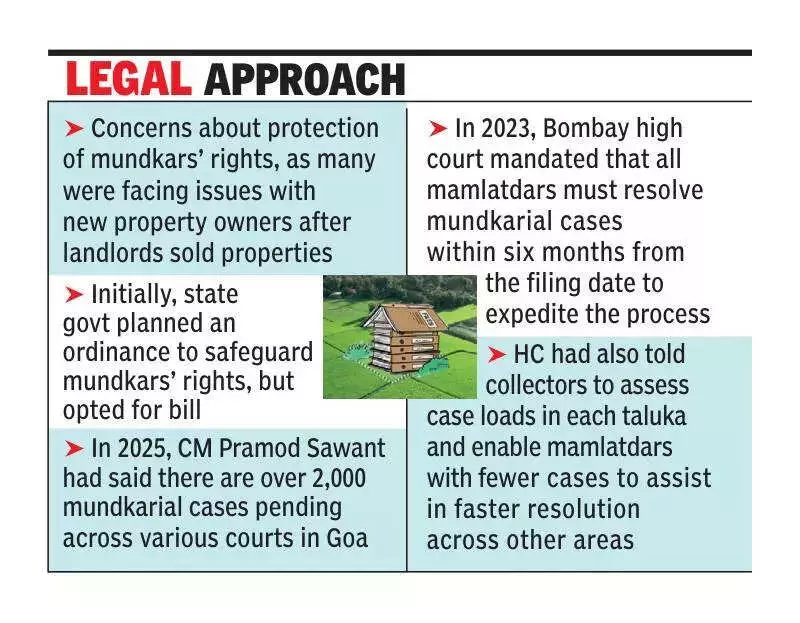
The Goa government has taken a decisive step to protect the rights of mundkars, the traditional tenants residing on landlords' properties. Chief Minister Pramod Sawant announced that a new bill will be introduced to prevent landlords from selling their land until the rights of these mundkars are formally settled.
Immediate Relief for Vulnerable Tenants
This legislative move is set to provide major relief to numerous mundkars who live in landlords' properties but have not been officially declared as such through the courts. The bill is scheduled for the winter session of the Goa legislative assembly, commencing on January 12. Sawant revealed that the decision came after receiving numerous complaints about mundkars' rights being violated when properties were sold to new owners, leaving the tenants in a precarious situation.
The Chief Minister explained that the government initially considered issuing an ordinance. However, with the assembly session being summoned, they opted to introduce a comprehensive bill instead. This law aims specifically to aid mundkars who have been residing on the land for years but never initiated legal proceedings to formalize their status.

Addressing a Massive Backlog of Cases
The urgency of the bill is underscored by the sheer volume of unresolved cases. Over 2,000 mundkarial cases are currently pending across various courts in the state. The government had previously set a deadline of December 2022 to resolve these petitions, but significant progress was not achieved.
In 2022, Revenue Minister Atanasio 'Babush' Monserrate stated that mamlatdars (revenue officers) would be given specific targets to clear these cases by year's end. The following year, the High Court of Bombay at Goa issued a directive, ordering all mamlatdars to ensure disposal of mundkarial cases within six months of filing.
Judicial Push for Speedy Disposal
A division bench comprising Justices M S Sonak and Valmiki Menezes took active measures to tackle the pendency. The court directed collectors to analyze the backlog in each taluka and assign cases efficiently to revenue officers. It further instructed them to deploy mamlatdars with lighter caseloads to other talukas to expedite the process, issuing appropriate orders to empower these officers.
The High Court mandated that collectors must regularly assess the workload on revenue officers, ensuring a systematic approach to clearing the long-pending cases. Chief Minister Sawant emphasized the government's commitment to disposing of these petitions, aligning with the judiciary's push for a resolution.
The forthcoming bill represents a critical intervention, aiming to freeze contentious land transactions and provide a stable environment for the final adjudication of mundkars' rights, a longstanding issue in Goa's socio-legal landscape.






