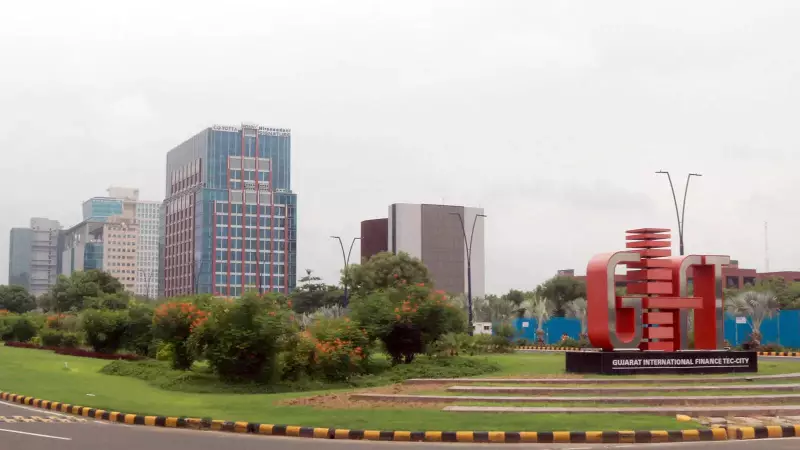
In a landmark move that captured national attention, Gujarat's strictly prohibitionist stance was partially relaxed within the confines of the Gujarat International Finance Tec-City (GIFT City) on New Year's Eve 2023. For a state that has been officially 'dry' since 1960, this decision to create a designated zone for alcohol consumption was both bold and pragmatic, aimed at fostering a global business environment. Two years into this unique social experiment, the results offer a measured look at how a prohibition state can accommodate international norms without fully abandoning its core principle.
A Calculated Thaw in a Dry State
The introduction of legal alcohol service in GIFT City was not a sweeping policy change but a highly controlled exemption. The objective was clear: to attract and retain a globalised workforce and international businesses to India's premier financial hub. Authorities crafted a system of permits to regulate access, ensuring that the consumption remained within the designated area and served a specific professional purpose.
Official data from the two-year period reveals a cautious uptake. A total of 985 permanent employees working in GIFT City have been granted liquor access permits. For visitors and temporary guests, the system has issued 5,291 temporary permits. The volume of alcohol sold provides further insight into the scale of this experiment, with 5,552 bulk litres sold to date. These figures, while modest, indicate a steady and regulated demand, far from a free-flowing scenario.

Balancing Tradition with Global Ambition
The GIFT City model represents a delicate compromise. On one hand, it respects Gujarat's long-standing cultural and legal commitment to prohibition, a policy in place for over six decades. On the other, it acknowledges the practical realities of competing on a world stage where social and business networking often extends beyond the workplace.
Officials view the experiment as a success in this balancing act. The permit system acts as a filter, allowing the facility to serve its intended purpose for professionals and international clients while preventing widespread public access. The model demonstrates that a controlled environment for conviviality can coexist with a state-wide ban, addressing business needs without triggering a full policy reversal.
The Statewide Replication Question
The relative success of the GIFT City zone inevitably leads to the pivotal question: Could this model be replicated elsewhere in Gujarat? Proponents argue that it presents a viable template for other special economic zones, high-end tourism corridors, or large industrial clusters that require a global interface. It offers a way to boost investment and cater to expatriates without a blanket repeal of prohibition laws.
However, critics and observers caution that scaling the model is fraught with challenges. GIFT City is a geographically contained, tightly secured, and professionally oriented enclave. Extending similar provisions to other areas could be harder to monitor and control, potentially diluting the state's prohibition ethos. The debate continues as stakeholders assess whether GIFT City's 'booze zone' is a one-off necessity or a pilot for a more nuanced approach to Gujarat's dry law in the face of economic globalization.
The two-year journey of GIFT City's alcohol policy underscores a shift towards pragmatic governance. It proves that even in a steadfast prohibition territory, business pragmatism can find a way, carving out exceptions that serve larger economic goals while maintaining the overall framework of the law. The coming years will determine if this glass remains half-full only in GIFT City or if its model inspires measured change elsewhere.