In the historic city of Gaya, the municipal corporation finds itself in a paradoxical financial situation. Despite controlling prime land parcels across strategic locations including G B Road, the civic body continues to experience persistent financial stress. The root cause lies in the gross underutilization of valuable assets, with some properties remaining completely idle while others serve purposes far below their potential.
The Kedarnath Market Conundrum
The most glaring example of this mismanagement is the Kedarnath Market, spread across nearly four acres of prime urban land. With an estimated market value exceeding Rs 1,000 crore, this asset represents what should be a financial powerhouse for the municipal corporation. Instead, the market has become a textbook case of prolonged administrative neglect and inefficient utilization.
Current State of Affairs
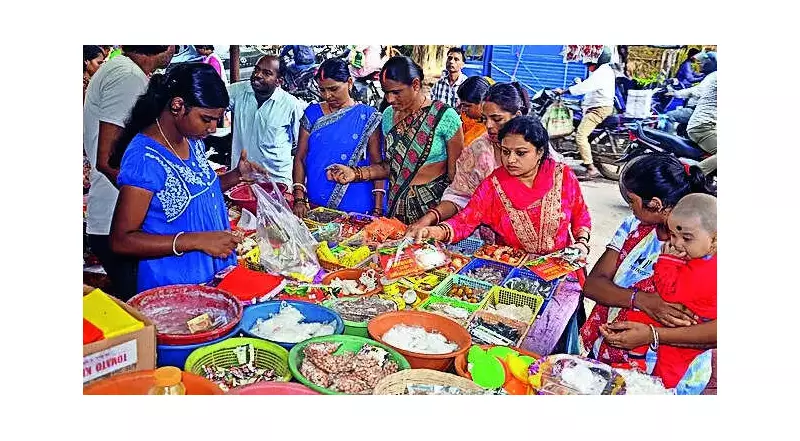
Presently, approximately 400 vegetable wholesalers, retailers, and various vendors operate within this valuable space under what officials describe as primitive and unhygienic conditions. The area is characterized by scattered filth, accumulated garbage, and decaying vegetables and fruits. This not only creates significant inconvenience for the general public but also deprives the municipal body of potential revenue amounting to several crores annually.

In most urban centers, such centrally located land would be developed into a major economic growth engine. However, in Gaya, the Kedarnath Market in its current form has unfortunately come to symbolize urban decay, presenting what many residents describe as an offensive and depressing picture of municipal governance.
Beyond Kedarnath: Other Underutilized Assets
The problem extends well beyond the market area. The municipal corporation owns additional valuable land parcels off Jagjivan Road, Station Road, and Church Road, among other strategic locations. Sources indicate that the situation in these areas mirrors the challenges seen at Kedarnath Market, with similar patterns of underutilization and neglect.
The Encroachment Challenge
Lalji Prasad, a former member of the corporation's empowered committee, highlighted how prolonged administrative neglect has led to widespread encroachment on municipal land. "A sizeable part of the municipal land has come under encroachment, and removing these illegal squatters is easier said than done," he explained, pointing to the complex legal and social challenges involved in reclaiming these properties.
While Kedarnath Market continues to host vegetable and fruit trade in an inefficient manner, the sprawling campus off Jagjivan Road presents another case of asset misuse. Located north of the Gaya Circuit House, this property previously served as the office of the Gaya Regional Development Authority. Currently, it functions as a dumping ground for abandoned sanitary hardware, mobile toilets, JCB machines, and various vehicles deployed for waste carriage and disposal.
Administrative Response and Future Plans
Municipal Commissioner Abhishek Palasia acknowledged that the landed assets of the municipal body, including both Kedarnath Market and the former GRDA complex, could be put to far better use. Having taken charge only recently, he confirmed that he is actively working on comprehensive plans for improved utilization of these valuable properties.
The commissioner also recognized that portions of municipal land are under adverse possession, stating that making these properties encroachment-free represents his first priority. While not providing specific details, Palasia confirmed that both Kedarnath Market and the former GRDA complex feature prominently in his redevelopment plans.
Relocation and Redevelopment Strategy
"As a first step, the existing vegetable and fruit shops will be relocated to the Bazar Samiti complex at Chandauti," Palasia announced. He emphasized that the redevelopment plan would focus not only on revenue generation but also on addressing the practical needs of residents. This includes creating proper parking facilities, convenient shopping spaces, and employment generation opportunities.
"Traffic requirements of the city will also be kept in mind while planning the utilization of the Kedarnath Market land," the municipal commissioner added, indicating a holistic approach to urban planning.

Historical Context and Previous Proposals
This is not the first time redevelopment of the Kedarnath Market area has been considered. Earlier proposals had suggested developing the property under the Public-Private Partnership (PPP) mode, recognizing that the municipal body lacked both the financial resources and technical expertise required for such a large-scale redevelopment project.
The current financial reality remains stark: despite owning assets worth thousands of crores, the Gaya Municipal Corporation continues to depend largely on government grants and statutory receipts to sustain its day-to-day functioning. This dependence highlights the urgent need for strategic asset management and innovative redevelopment approaches that could transform these underutilized properties into sustainable revenue sources while improving urban infrastructure and quality of life for Gaya's residents.