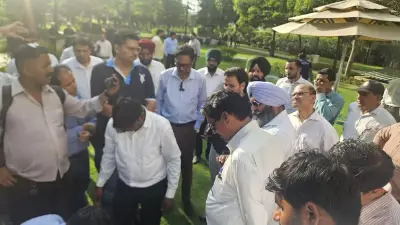
Ferozepur Residents Stage Protest, Lock Municipal Office Over Civic Neglect
In a dramatic display of public frustration, irate residents of Railway Basti in Ferozepur staged a protest outside the Guru Har Sahai municipal council office on Monday, ultimately locking its main gate. The protest was a direct response to the civic body's alleged neglect of severe cleanliness issues and persistent waterlogging on the roads leading to their locality.
Residents Voice Health and Social Concerns
The protesters leveled serious allegations against the municipal authorities, claiming that despite numerous complaints, no concrete action had been taken to address the deteriorating conditions. They highlighted that stagnant water in the streets was not only causing a foul smell to spread throughout the area but also significantly increasing the risk of waterborne diseases.
Joga Singh, a resident of Railway Basti, articulated the daily hardships faced by the community. "People are facing great difficulty in going to schools and offices due to the waterlogged and filthy roads. The situation has become so bad that even our relatives avoid visiting us now," he stated, underscoring the social isolation compounding the physical inconvenience.

Political Support and Official Response
The protest gained political backing with BJP leader Deepak Sharma joining the residents. He criticized the municipal council for neglecting the provision of basic civic amenities. "The civic body is failing in its fundamental duty. If this problem is not resolved at the earliest, we will be forced to intensify our struggle," Sharma warned, signaling potential escalation if demands remain unmet.
Following the protest and the locking of the gate, municipal council officials engaged with the demonstrators. They provided assurances of a speedy resolution to the longstanding issues of waterlogging and inadequate cleanliness. Satisfied with this commitment, the residents subsequently lifted their dharna and unlocked the gate.
This incident in Ferozepur highlights a critical breakdown in urban governance and the growing public impatience with civic authorities over fundamental issues like sanitation and drainage. It serves as a stark reminder of the essential services expected from local municipal bodies and the consequences of perceived inaction.